Cart

Oops, your cart is still empty
Looks like you haven’t added anything yet. Start exploring our products and find what you need.
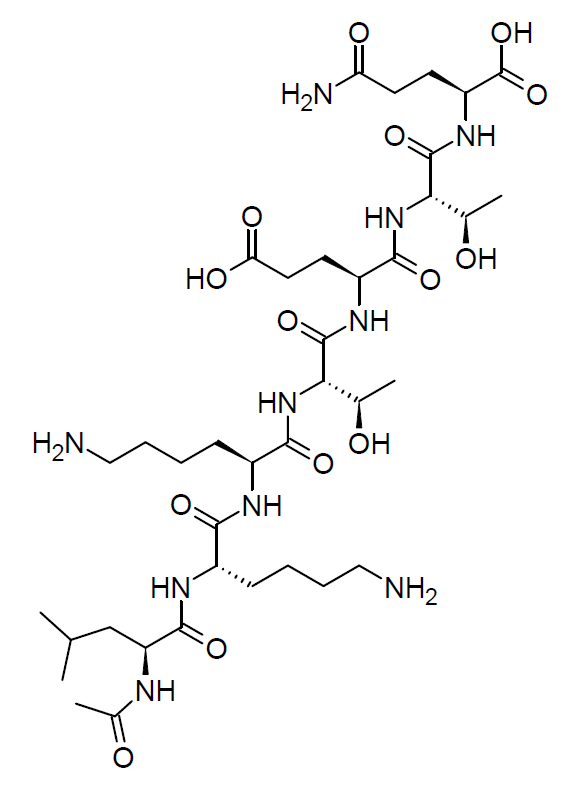
TB-500 is a synthetic peptide derived from a naturally occurring protein fragment from a small size naturally occurring peptide known as thymosin β4 (Tβ4). Tβ4 is found throughout the human body and is particularly abundant in tissues involved in healing and regeneration. It plays an important role in cell migration, tissue repair, blood vessel formation, and the regulation of inflammation.
Tβ4 was first identified quite early, in 1966 by Goldstein and White and it was not fully characterized until 1981.1 During experiments on different motifs within the Tβ4 structure, the TB- 500 sequence (LKKTETQ) was first identified in the year 2003.2
Interest in Tβ4 and TB-500 has grown considerably since its discovery, particularly in sports medicine, and regenerative research because of its potential ability to accelerate recovery from injuries. Tβ4 and TB-500 are on the World Anti-Doping Agency Prohibited List under Section S2, due to this reason. Unlike growth factors that directly stimulate cell division, Tβ4 and TB-500 appear to act primarily as a signaling molecule that helps coordinate the body’s repair mechanisms.
TB-500 is a structural fragment of Tβ4. While Tβ4 is composed of 43 amino acids, TB-500 only corresponds to 7 of these amino acids (Ac-LKKTETQ) from the middle portion of thymosin β4. It also adds an acetyl tag to the N-terminal leucine residue. TB-500 is thought to be the most important active structure within Tβ4. This means it is meant to reproduce a set of biological effects of Tβ4, while being easier to produce and potentially also offer other benefits such as increased stability and tissue penetration. The central LKKTETQ sequence binds to actin (a cell structural protein) and is found naturally in wound fluid.3
Tβ4 is present in almost every tissue of the body. One of its primary functions is the regulation of a structural protein called actin. TB-500 also affects actin in the same way. Actin forms part of the cellular skeleton and is crucial for cell movement. During healing, cells must migrate into damaged areas to remove debris, rebuild tissue, and restore function.
Tβ4 has a remarkable variety of biological activities, which depend on specific parts of its sequence. The following properties have been identified:4
There are many preclinical trials in cell culture or animals on the topic of Tβ4, most of which are beyond the scope of this summary. A list of further studies can be found at the end of this document. A few representative studies are described in the section below.
There are no essentially no efficacy studies of TB-500 itself. However, initial studies on the sequence of TB-500 showed that other peptides and fragments containing the entire actin binding domain (LKKTETQ) were active for endothelial cell migration and angiogenesis, whereas those lacking this sequence were inactive. LKKTETQ was the smallest peptide tested that could duplicate the activity of the intact molecule and block adhesion to Tβ4.2
Rapid vascular remodeling of damaged dermal tissue is required to heal burn wounds. The study confirmed that remodeling of actin was regulated by Tβ4-induced heat shock proteins. Tβ4 improved wound-healing markers, such as wound closure and vascularization. The results suggested that an association between Tβ4 and heat shock protein 70 is responsible for the healing of burn wounds.5
The results of a further in vitro study demonstrated that Tβ4 acts as an attractant for endothelial cells, stimulating the migration of endothelial cells. Tβ4 significantly accelerated the rate of migration into a wounded scratch between the cells. Tβ4 treatment also increased the production of matrix metalloproteinases that may aid to prepare the extracellular matrix for the formation of new blood vessels.6
Skin flaps can be used clinically as grafts for areas with damaged tissues after accidents or in plastic surgery. Tβ4 can increase blood flow and reduce ischemia–reperfusion injury; a study was undertaken to investigate the effect of Tβ4 on the survival of skin flaps in rats. A total of 45 male Sprague–Dawley rats were used and subjected to a skin flap operation. Tβ4 significantly reduced the necrotic area in the treatment groups after 7 days compared with the control group, and the rats receiving Tβ4 5 mg/kg twice per day had the highest flap survival rate.7 Tβ4 was also able to aid in direct wound healing in mice.8,9 Additional experiments using subcutaneously implanted gel showed that Tβ4 stimulated cell migration in living mice as well.6
Promising results were also achieved on artificial grafts made from a collagen–chitosan sponge scaffold encapsulated with Tβ4. The controlled release of Tβ4 from the scaffolds elicited localized and prolonged effects over 12 days, as shown by an enzyme-linked immunosorbent assay (ELISA). In vivo, the artificial grafts improved wound healing, with faster wound re-epithelialization, better dermal reorganization, and higher wound vascularization.10
There are no clinical trials available for TB-500, all studies hereafter were performed with thymosin β4.
The study evaluated the safety, tolerability and pharmacokinetics of Tβ4 for single and multiple intravenous injections in healthy subjects. A total of 30 healthy subjects were randomly enrolled in the multiple-dose trial, and 3 cohorts (0.5, 2.0 and 5.0 μg/kg) were administered once human Tβ4 daily for 10 days and observed for 28 days. Adverse events were mild to moderate in intensity. There were no dose-limiting toxicities or serious adverse events. There was no obvious accumulation after continuous administration. Thus, the drug can be concluded to be well tolerated and safe in healthy people.11
Nine patients with severe dry eye were treated with either Tβ4 in a topical eye droplet formulation or control 6 times daily over a period of 28 days in a small phase 2 trial. Dry eye sign and symptom assessments, such as ocular discomfort and corneal damage were evaluated at various time points. Tβ4 eye drops were safe and well tolerated and met key efficacy objectives.12
A single-center, prospective, double-masked, placebo-controlled Phase II study randomized 72 qualifying subjects 1:1 to receive either 0.1% Tβ4 or placebo treatment for a total of 28 days. Significant differences between treatment groups were observed for a number of endpoints. The discomfort on day 28 was reduced by 27% in Tβ4-treated subjects compared with the placebo group. Subjects in the 0.1% Tβ4 treatment group also showed statistically significant reductions in corneal damage. No adverse events were observed.13
Tβ4 was investigated for a potential use in promoting myocardial cell survival during acute myocardial infarction. Four cohorts, with 10 healthy subjects each, were first given a single intravenous dose of placebo or synthetic Tβ4. After safety review of the single dose data, the participants then received ascending doses of either 42, 140, 420, or 1260 mg for 14 days. Adverse events were infrequent, and mild or moderate in intensity. As reported previously, there were no dose limiting toxicities or serious adverse events. Pharmacokinetic profile for single dose showed a dose proportional response, and an increasing half-life with increasing dose. Synthetic Tβ4 given intravenously as a single dose or in multiple daily doses for 14 days over a dose range of 42–1260 mg was well tolerated with no evidence of dose limiting toxicity.14
In a further clinical study with 96 subjects which received Tβ4 within 8 h after they developed myocardial infarction via injection, the damaged cardiac tissue was significantly reduced. However, if Tβ4 was supplied at a later time point the benefit disappeared.15
No human interventional studies of administered Tβ4 or TB-500 are available with tendon, ligament, muscle, bone, cartilage, adipose, intervertebral disc tissue; the human cartilage data did not come from direct intervention studies. Hence, there is not sufficient clinical evidence currently that supports the use of either peptide in such applications.16
Overall, Tβ4 represents one of the most studied regenerative agents in modern peptide research. Its ability to influence cell migration, tissue remodeling, inflammation, and blood vessel formation provides a plausible biological basis for many of its reported effects. While laboratory and animal studies are encouraging, and some clinical trials exist, larger controlled human studies are still needed to determine the full therapeutic potential and long-term safety of Tβ4 in clinical medicine. At the present time, neither Tβ4 nor TB-500 are approved in any country.
Most experimental use of Tβ4 involves injection, either subcutaneously or intramuscularly. An exception to this is studies focusing on ocular application, which use Tβ4 in a liquid topical formulation. Oral delivery is generally considered unlikely to be effective due to breakdown in stomach and intestines.
At the current time, research activity for TB-500 and Tβ4 is quite high, with new studies and review being published continuously. It is quite likely that we will see further new clinical evidence in the coming years.
For TB-500, evidence is generally lacking and no claims on its efficacy in human use can be made. Not because it has been shown to be ineffective, but because there are very few reports on TB- 500 and no human trials are available at all. However, one clinical trial (NCT07487363) for clinical use of TB-500 in atherosclerotic cardiovascular disease is currently in recruitment phase. The study is sponsored by Hudson Biotech.
Thymosin β4 promotes angiogenesis, wound healing, and hair follicle development (2004)
Thymosin β4 and thymosin β4-derived peptides induce mast cell exocytosis (2007)
Regenerative Protein Thymosin β4 Is a Novel Regulator of Purinergic Signaling (2011)
Thymosin β4 Promotes the Migration of Endothelial Cells without Intracellular Ca2+ Elevation (2012) Thymosin β4 affecting the cytoskeleton organization of the myofibroblasts (2012)
Thymosin β4 Is Rapidly Internalized by Cells and Does Not Induce Intracellular Ca2+ Elevation (2012) Synthesis and characterization of the N-terminal acetylated 17-23 fragment of thymosin beta 4 identified in TB-500, a product suspected to possess doping potential (2012)
Thymosin β4 Stabilizes Hypoxia-Inducible Factor-1α Protein in an Oxygen-Independent Manner (2012)
Effects of thymosin β4 on the bone formation of calvarial defects in rats (2013)
A novel dimeric thymosin beta 4 with enhanced activities accelerates the rate of wound healing (2013)
Advances in the basic and clinical applications of thymosin β4 (2015)
1. Goldstein AL. History of the discovery of the thymosins. Ann N Y Acad Sci. 2007;1112:1–13. doi: 10.1196/annals.1415.045.
2. Philp D, Huff T, Gho YS, Hannappel E, Kleinman HK. The actin binding site on thymosin beta4 promotes angiogenesis. FASEB J. 2003;17:2103–2105. doi: 10.1096/fj.03-0121fje.
3. Huang C-M, Wang C-C, Barnes S, Elmets CA. In vivo detection of secreted proteins from wounded skin using capillary ultrafiltration probes and mass spectrometric proteomics. Proteomics. 2006;6:5805–5814. doi: 10.1002/pmic.200600163.
4. Kleinman HK, Sosne G. Thymosin β4 Promotes Dermal Healing. Vitam Horm. 2016;102:251–275. doi: 10.1016/bs.vh.2016.04.005.
5. Kim S, Kwon J. Thymosin β4 has a major role in dermal burn wound healing that involves actin cytoskeletal remodelling via heat-shock protein 70. J Tissue Eng Regen Med. 2017;11:1262–1273. doi: 10.1002/term.2028.
6. Malinda KM, Goldstein AL, Kleinman HK. Thymosin beta 4 stimulates directional migration of human umbilical vein endothelial cells. FASEB J. 1997;11:474–481. doi: 10.1096/fasebj.11.6.9194528.
7. Lin Y, Lin B, Lin D, Huang G, Cao B. Effect of Thymosin β4 on the Survival of Random Skin Flaps in Rats. J Reconstr Microsurg. 2015;31:464–470. doi: 10.1055/s-0035-1549444.
8. Li X, Zheng L, Peng F, Qi C, Zhang X, Zhou A, Liu Z, Wu S. Recombinant thymosin beta 4 can promote full-thickness cutaneous wound healing. Protein Expr Purif. 2007;56:229–236. doi: 10.1016/j.pep.2007.08.011.
9. Philp D, Badamchian M, Scheremeta B, Nguyen M, Goldstein AL, Kleinman HK. Thymosin beta 4 and a synthetic peptide containing its actin-binding domain promote dermal wound repair in db/db diabetic mice and in aged mice. Wound Repair Regen. 2003;11:19–24. doi: 10.1046/j.1524-475X.2003.11105.x.
10. Ti D, Hao H, Xia L, Tong C, Liu J, Dong L, Xu S, Zhao Y, Liu H, Fu X, et al. Controlled release of thymosin beta 4 using a collagen-chitosan sponge scaffold augments cutaneous wound healing and increases angiogenesis in diabetic rats with hindlimb ischemia. Tissue Eng Part A. 2015;21:541–549. doi: 10.1089/ten.tea.2013.0750.
11. Wang X, Liu L, Qi L, Lei C, Li P, Wang Y, Liu C, Bai H, Han C, Sun Y, et al. A first-in-human, randomized, double-blind, single- and multiple-dose, phase I study of recombinant human thymosin β4 in healthy Chinese volunteers. J Cell Mol Med. 2021;25:8222–8228. doi: 10.1111/jcmm.16693.
12. Sosne G, Dunn SP, Kim C. Thymosin β4 significantly improves signs and symptoms of severe dry eye in a phase 2 randomized trial. Cornea. 2015;34:491–496. doi: 10.1097/ICO.0000000000000379.
13. Sosne G, Ousler GW. Thymosin beta 4 ophthalmic solution for dry eye: a randomized, placebo-controlled, Phase II clinical trial conducted using the controlled adverse environment (CAE™) model. Clin Ophthalmol. 2015;9:877–884. doi: 10.2147/OPTH.S80954.
14. Ruff D, Crockford D, Girardi G, Zhang Y. A randomized, placebo-controlled, single and multiple dose study of intravenous thymosin beta4 in healthy volunteers. Ann N Y Acad Sci. 2010;1194:223–229. doi: 10.1111/j.1749-6632.2010.05474.x.
15. Zhang Y, Dong Q, Bian X, Qiao Z, Cui C, Yang N, Liu J, Fu R, Zhang J, Jia L, et al. Recombinant human thymosin beta 4 improves ischemic cardiac dysfunction in mice and patients with acute ST-segment elevation myocardial infarction after reperfusion. Cardiovasc Res. 2025;121:2747–2758. doi: 10.1093/cvr/cvaf223.
16. McGuire F, Hughes E, Maak T, Cushman DM. Thymosin Beta-4 and TB-500 in Tissue Healing, Regeneration, and Musculoskeletal Repair: A Scoping Review. Applied Sciences. 2026;16:6202. doi: 10.3390/app16126202.