Cart

Oops, your cart is still empty
Looks like you haven’t added anything yet. Start exploring our products and find what you need.

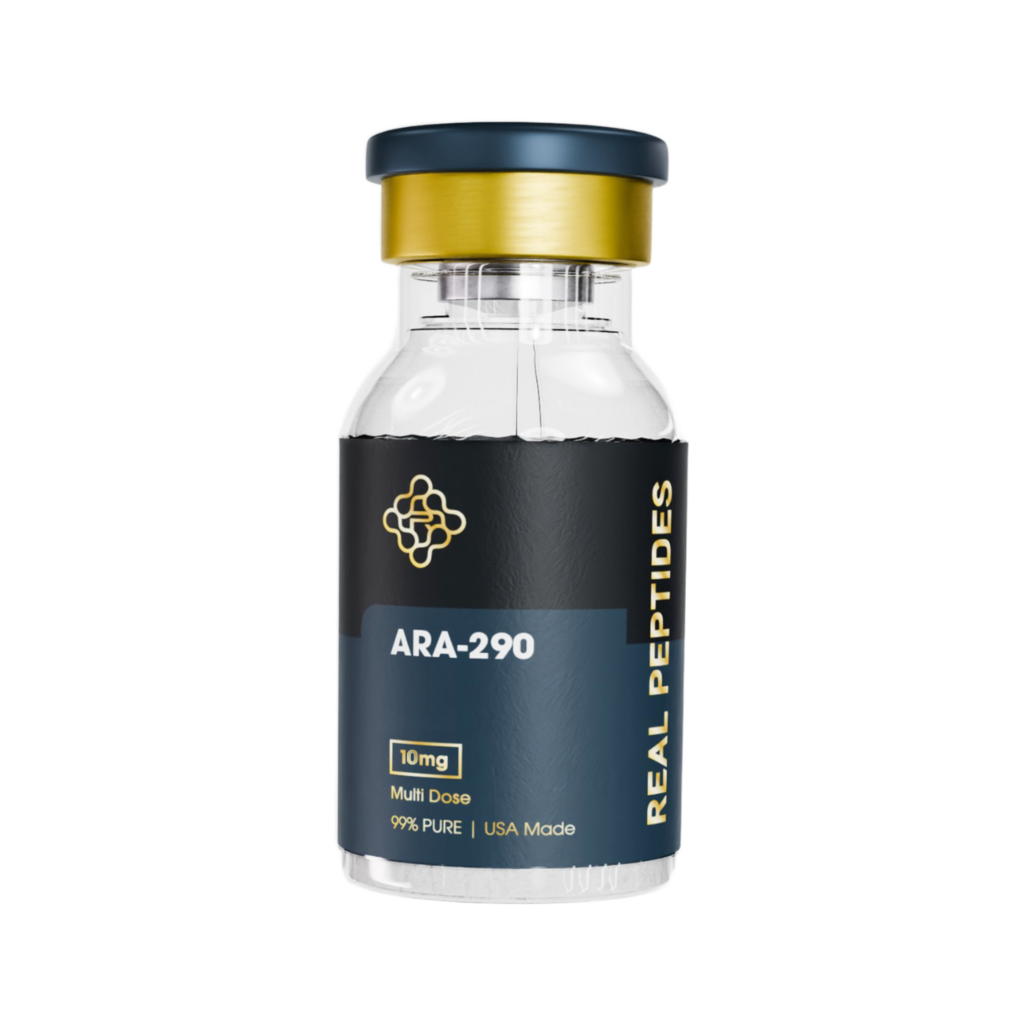
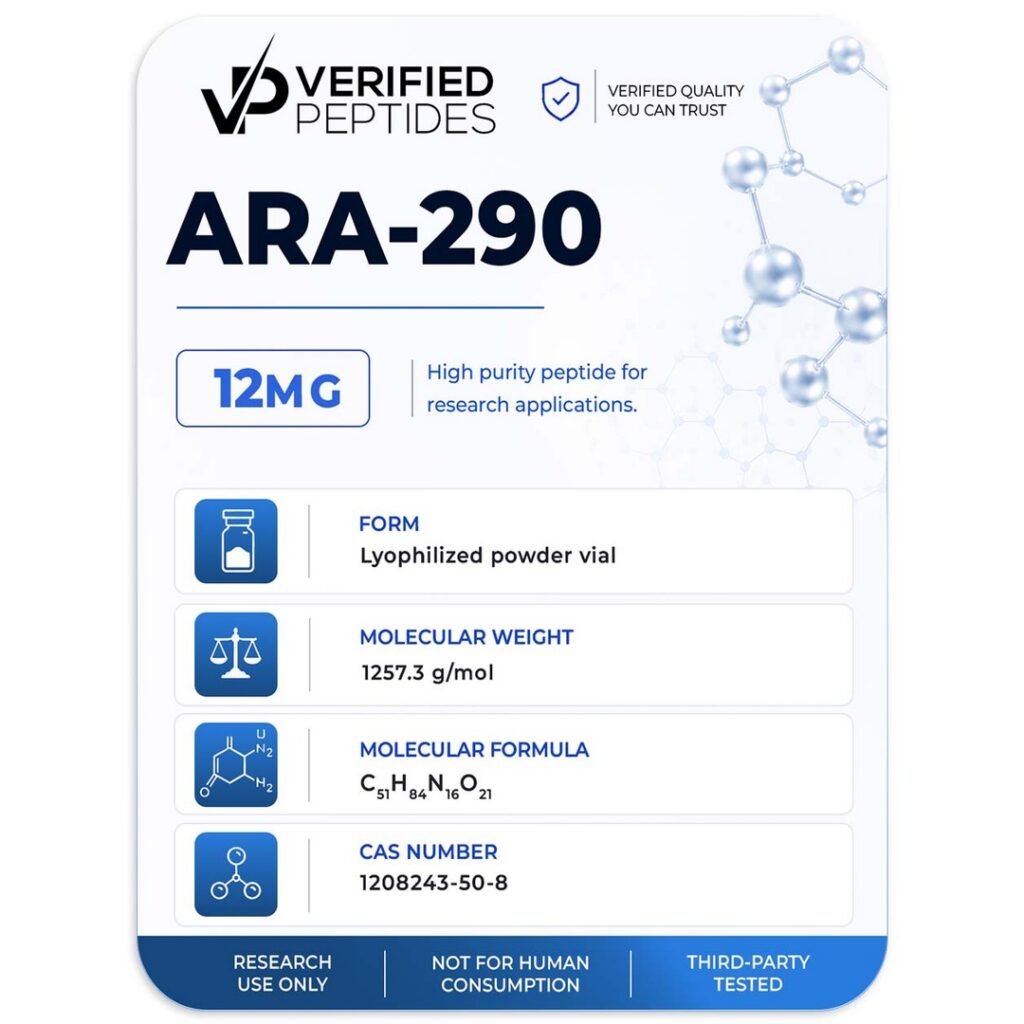
ARA-290, also known by its International Nonproprietary Name cibinetide, is a synthetic 11-amino-acid peptide engineered from a surface-exposed region (the “helix-B” domain) of human erythropoietin (EPO). Its sequence, corresponding to residues 11-21 of the erythropoietin helix B surface, is designed to retain EPO’s tissue-protective, anti-inflammatory signalling while eliminating its erythropoietic (red-blood-cell-stimulating) activity.
The rationale for ARA-290 stems from research by Michael Brines, Anthony Cerami, and colleagues, who found that EPO exerts two pharmacologically distinct activities through two different receptor architectures. Classical erythropoiesis is mediated by a homodimeric EPO receptor (EPOR/EPOR) on erythroid progenitor cells. Separately, EPO’s tissue-protective, anti-apoptotic, and anti-inflammatory effects on non-haematopoietic tissues (neurons, endothelium, and other cell types) were shown to be mediated by a distinct heteromeric receptor complex composed of EPOR paired with the beta-common receptor (βcR, also known as CD131), a complex Brines and Cerami termed the “innate repair receptor” (IRR). Because this second pathway does not require the erythropoietic EPOR/EPOR homodimer, it opened the possibility of designing molecules that engage the IRR selectively, without stimulating erythropoiesis (and its associated risks of thrombosis and hypertension seen with EPO-based drugs). ARA-290 was developed at Araim Pharmaceuticals specifically as such a selective, non-erythropoietic IRR agonist, and has since been studied primarily for neuropathic pain, small-fibre neuropathy, and other tissue-protective applications.
ARA-290 is proposed to bind and activate the EPOR/βcR heteromeric complex on non-erythroid cells, including neurons, glial cells, and vascular endothelium, without engaging the classical EPOR/EPOR homodimer responsible for erythropoiesis. This selectivity is the basis for the compound’s designation as “non-erythropoietic,” it is designed to avoid raising haemoglobin or haematocrit while retaining the receptor engagement thought to underlie EPO’s cytoprotective actions.
In rodent models of neuropathic pain (typically induced by peripheral nerve injury), ARA-290 administration produced long-term relief of pain-related behaviour that was coupled with suppression of spinal microglial activation, a key driver of central sensitisation and chronic neuropathic pain. This suggests an anti-inflammatory, glia-modulating component to the peptide’s analgesic mechanism, distinct from direct receptor blockade or opioid-type action.
Separately, ARA-290 has been associated with increased corneal and dermal small nerve fibre density in human studies, suggesting a trophic or regenerative effect on peripheral small-fibre afferents in addition to any acute anti-nociceptive or anti-inflammatory action. The precise molecular pathway linking IRR activation to nerve fibre regeneration has not been fully elucidated but is thought to involve anti-apoptotic and pro-survival intracellular signalling (e.g., PI3K/Akt, JAK2/STAT5) downstream of the heteroreceptor, analogous to pathways implicated in EPO’s broader tissue-protective literature.
In a widely cited preclinical study, ARA-290 produced durable, long-lasting relief of neuropathic pain behaviour in rodent nerve-injury models, an effect that was accompanied by suppression of the spinal microglial response typically seen after nerve injury. This provided the initial rationale for advancing the peptide into human neuropathic pain studies, on the hypothesis that modulating the underlying neuroinflammatory process, rather than simply blunting pain signalling, could produce more durable benefit than conventional analgesics.
ARA-290 has a moderate body of published human trial data, concentrated in two clinical contexts: sarcoidosis-associated small-fibre neuropathy and type 2 diabetes-associated neuropathy.
In a randomized, double-blind, placebo-controlled pilot study in patients with sarcoidosis and symptoms of small-fibre neuropathy, 28 days of daily subcutaneous ARA-290 improved neuropathic symptom scores and was associated with an increase in corneal nerve fibre density on confocal microscopy, an objective, quantifiable marker of small-fibre nerve status, with no comparable change in the placebo group. A follow-up study in the same population reported that ARA-290 treatment increased both corneal nerve fibre area and counts of regenerating dermal nerve fibres, with the 4 mg daily dose producing the largest placebo-corrected effect. Symptom improvements, measured using the Small Fiber Neuropathy Screening List and other patient-reported instruments, were reported to be sustained through follow-up periods extending to around 16 weeks after the end of dosing.
In a separate randomized, placebo-controlled Phase 2 study in patients with type 2 diabetes and painful neuropathy, participants self-administered 4 mg ARA-290 or placebo subcutaneously daily for 28 days, with follow-up to day 56. The ARA-290 group showed statistically significant improvements relative to placebo in HbA1c, cholesterol-to-HDL ratio, and triglycerides, alongside a significant reduction in neuropathic pain symptom scores measured by the PainDetect questionnaire. No safety concerns were identified during the trial.
Across these studies, ARA-290’s clinical signal has been most consistent for subjective and objective small-fibre neuropathy measures in sarcoidosis, with additional metabolic findings in the diabetes trial. All published human trials to date have been relatively small, early-phase studies; no large, pivotal Phase 3 trial data have been published.
Across the completed Phase 2 studies, ARA-290 was generally reported as well tolerated, with no major safety signals identified in either the sarcoidosis or type 2 diabetes trial populations. Critically, and consistent with its design rationale, ARA-290 has not been associated with the erythropoietic side effects (elevated haematocrit, hypertension, thrombotic risk) that limit the use of full-length erythropoietin and other erythropoiesis-stimulating agents, this was, in fact, the central design goal of the molecule. That said, the published safety database remains limited to a small number of short-duration (28-56 day observation) early-phase trials in specific patient populations; there is no long-term human safety data, no data in healthy volunteers at scale, and no formal toxicology package in the public literature comparable to what would be expected for an approved drug. ARA-290’s originating company, Araim Pharmaceuticals, ceased operations, and no sponsor currently holds an active Investigational New Drug (IND) application for the compound in the United States; consequently, no further formal safety data collection through the standard regulatory pathway appears to be ongoing.
ARA-290 (cibinetide) is a rationally designed, non-erythropoietic derivative of erythropoietin engineered to selectively activate the tissue-protective “innate repair receptor” (EPOR/βcR heterocomplex) while avoiding classical erythropoietic receptor activation. It has one of the more developed early-phase human clinical records among compounds in this category, including multiple placebo-controlled trials showing improvements in neuropathic pain symptoms and objective small-fibre nerve density markers in sarcoidosis-associated neuropathy, plus metabolic and neuropathic benefits in a type 2 diabetes trial. The mechanistic story, separable erythropoietic and tissue-protective EPO receptor pathways, is well supported by the broader Brines/Cerami literature predating ARA-290 itself. Nonetheless, the human evidence remains limited to small, short-duration Phase 2 studies; no Phase 3 trial has been completed or published. The compound received FDA Orphan Drug and Fast Track designations for sarcoidosis-associated neuropathic pain, but these are development incentives, not marketing approvals, and ARA-290 is not an approved drug for any indication in any jurisdiction. With the discontinuation of Araim Pharmaceuticals’ operations, active clinical development appears to have stalled for reasons that appear organisational and commercial rather than reflecting a specific efficacy or safety failure, leaving ARA-290 in a state of arrested clinical development and continued availability strictly as a research compound.
1. Brines M, Cerami A. Erythropoietin-mediated tissue protection: reducing collateral damage from the primary injury response. J Intern Med. 2008;264(5):405-432. doi: 10.1111/j.1365-2796.2008.02024.x.
2. Brines M, Grasso G, Fiordaliso F, et al. Erythropoietin mediates tissue protection through an erythropoietin and common beta-subunit heteroreceptor. Proc Natl Acad Sci USA. 2004;101(41):14907-14912. doi: 10.1073/pnas.0406491101.
3. Swartjes M, Morariu A, Niesters M, et al. ARA 290, a peptide derived from the tertiary structure of erythropoietin, produces long-term relief of neuropathic pain coupled with suppression of the spinal microglia response. Mol Med. 2013. doi: 10.2119/molmed.2013.00025.
4. Dahan A, Dunne A, Swartjes M, et al. ARA 290 improves symptoms in patients with sarcoidosis-associated small nerve fiber loss and increases corneal nerve fiber density. Mol Med. 2013;19:334-345. doi: 10.2119/molmed.2013.00122.
5. Culver DA, Dahan A, Bajorunas D, et al. Cibinetide improves corneal nerve fiber abundance in patients with sarcoidosis-associated small nerve fiber loss and neuropathic pain. Invest Ophthalmol Vis Sci. 2017;58(6):BIO52-BIO60. doi: 10.1167/iovs.16-21291.
6. Heij L, Niesters M, Swartjes M, et al. ARA 290, a nonerythropoietic peptide engineered from erythropoietin, improves metabolic control and neuropathic symptoms in patients with type 2 diabetes. Mol Med. 2014;18(1):1071-1080. doi: 10.2119/molmed.2014.00215.
7. van Velzen M, Heij L, Niesters M, et al. ARA 290 for treatment of small fiber neuropathy in sarcoidosis. Expert Opin Investig Drugs. 2014;23(4):541-550. doi: 10.1517/13543784.2014.892072.