Cart

Oops, your cart is still empty
Looks like you haven’t added anything yet. Start exploring our products and find what you need.
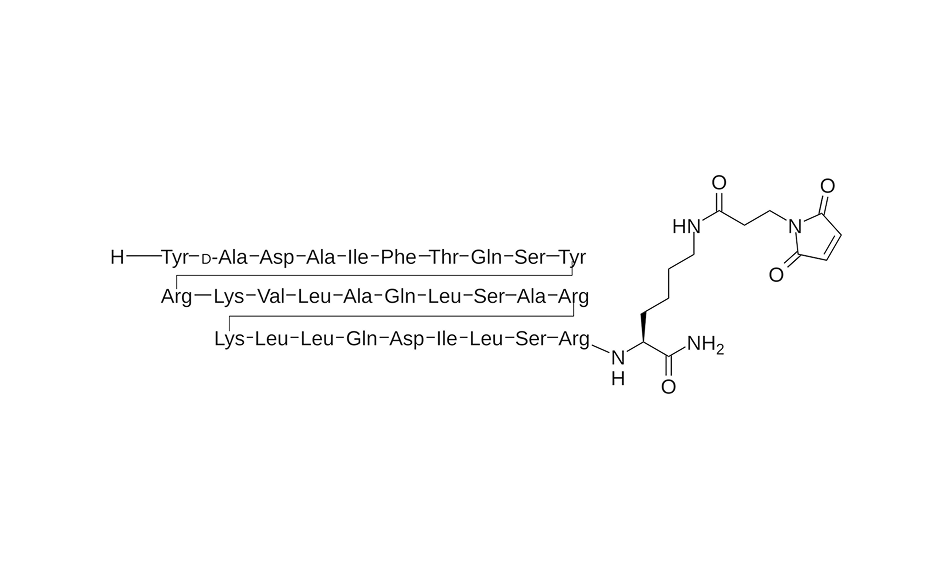
CJC-1295 is a synthetic analogue of growth hormone-releasing hormone (GHRH), developed by ConjuChem Biosciences (Montreal, Canada) in the mid-2000s as a long-acting alternative to native GHRH(1-29), which is degraded within minutes in circulation. The molecule is built on a modified 29-amino-acid GHRH(1-29) backbone bearing four substitutions (at positions 2, 8, 15, and 27) that confer resistance to enzymatic (dipeptidyl peptidase-IV and trypsin-like) degradation. Two distinct variants exist in the research literature and are frequently conflated:
Researchers’ interest in CJC-1295 stems from its use as a pharmacological tool to produce sustained, non-supraphysiological elevation of endogenous growth hormone (GH) and insulin-like growth factor 1 (IGF-1) secretion without the pulsatile spikes associated with exogenous recombinant GH administration, making it useful in endocrine and metabolic research contexts studying the GH/IGF-1 axis, pituitary somatotroph biology, and GHRH receptor pharmacology.
CJC-1295 binds and activates the GHRH receptor (GHRH-R) on anterior pituitary somatotrophs, the same receptor targeted by endogenous GHRH and by sermorelin. Receptor activation triggers a Gs-protein/adenylate cyclase/cAMP cascade that stimulates GH synthesis and pulsatile release. Because the peptide acts upstream of the pituitary rather than replacing GH directly, physiological negative-feedback loops (via somatostatin and IGF-1) remain intact; research by Ionescu and Frohman demonstrated that pulsatile GH secretion persists during continuous CJC-1295 stimulation rather than collapsing into tonic, unregulated release.
The DAC modification is not itself a GHRH-receptor pharmacophore change; rather, it is a pharmacokinetic engineering strategy. The maleimide-bearing DAC moiety reacts covalently with a reactive thiol on serum albumin (Cys-34) shortly after injection, effectively converting the peptide into an albumin-bound depot that releases active GHRH-analogue activity slowly and protects it from renal clearance and proteolysis. This mechanism underlies the multi-day half-life reported for CJC-1295 with DAC, in contrast to the roughly 30-minute half-life of the non-DAC form and the 2 to 3 minute half-life of native GHRH/sermorelin.
Alba et al. examined once-daily administration of CJC-1295 in GHRH-knockout mice, a model lacking endogenous GHRH signaling and consequently exhibiting dwarfism. Daily CJC-1295 administration normalized longitudinal growth and body composition (including relative lean and subcutaneous fat mass) in these GHRH-deficient mice, supporting the peptide’s capacity to substitute functionally for endogenous GHRH signaling in vivo.
The principal human evidence comes from Teichman et al. (2006), who conducted two randomized, placebo-controlled, double-blind, ascending-dose trials of CJC-1295 with DAC in healthy adults aged 21 to 61 years (28-day and 49-day protocols; single ascending subcutaneous doses in the first study, and two-to-three weekly or biweekly doses in the second). A single injection produced dose-dependent increases in mean plasma GH concentration of roughly 2- to 10-fold, sustained for 6 days or longer, and increases in plasma IGF-1 concentration of roughly 1.5- to 3-fold, sustained for 9 to 11 days. Repeated dosing over the longer protocol maintained mean IGF-1 levels within the upper normal physiological range without the supraphysiological excursions seen with direct recombinant GH dosing, and no serious adverse events were reported in this trial. A companion analysis by Ionescu and Frohman (2006), using the same study population, confirmed that endogenous pulsatile GH secretion patterns were preserved throughout sustained CJC-1295/DAC exposure rather than being replaced by continuous secretion. No large-scale, long-duration (multi-month to multi-year) human trials of CJC-1295 have been published, and no trials in populations with musculoskeletal, metabolic, or aging-related indications have been conducted or registered on ClinicalTrials.gov.
In the Teichman et al. (2006) trials, the most commonly reported adverse events were injection-site reactions (transient pain, erythema, and induration), which were more frequent with the DAC-conjugated, longer-acting form. No serious adverse events were reported in that controlled trial population. Outside of this controlled dataset, published toxicology is limited: there is no long-term (chronic, multi-year) human safety data, no formal carcinogenicity or genotoxicity study, and no dedicated reproductive/developmental toxicology study identified in the literature. The theoretical safety concerns generally raised for GH/IGF-1 axis agonists, insulin resistance, fluid retention, and a hypothetical tumor-promoting effect via sustained IGF-1 elevation (given IGF-1’s role as a growth-promoting, anti-apoptotic signal), apply to CJC-1295 by mechanistic analogy but have not been directly demonstrated in dedicated long-term studies of this compound. In 2023, the U.S. Food and Drug Administration placed CJC-1295 on Category 2 of its interim 503A compounding “bulks list” (substances presenting potential safety signals warranting further review, including immunogenicity and impurity concerns, alongside reports of injection-site and cardiovascular reactions); the nomination was subsequently withdrawn in September 2024 and CJC-1295 was removed from that list pending further Pharmacy Compounding Advisory Committee review. CJC-1295 is not FDA-approved for any indication, is not incorporated into any approved pharmaceutical product, and remains classified strictly as a research chemical.
The defining pharmacokinetic distinction between the two CJC-1295 variants is degradation resistance. Native GHRH(1-29) and sermorelin are rapidly cleaved by dipeptidyl peptidase-IV and other serum proteases, yielding a plasma half-life on the order of 2 to 3 minutes. The four amino-acid substitutions present in “modified GRF(1-29)” (CJC-1295 without DAC) confer partial protease resistance, extending the half-life to approximately 30 minutes. The DAC-conjugated form further extends stability by covalent sequestration onto circulating albumin, which shields the peptide from proteolytic and renal clearance and produces the reported 6- to 8-day terminal half-life in humans. As with most synthetic peptides, lyophilized CJC-1295 is markedly more stable than reconstituted solution, which is subject to hydrolysis and requires refrigerated storage and use within a limited timeframe once reconstituted, consistent with general peptide-stability principles rather than compound-specific published data.
CJC-1295 (specifically the DAC-conjugated form) is one of the more thoroughly human-tested compounds in the research-peptide space, with peer-reviewed, placebo-controlled trial data in healthy adults demonstrating sustained, dose-dependent GH and IGF-1 elevation while preserving physiological pulsatility. Its mechanism, GHRH receptor agonism, engineered for prolonged exposure via albumin conjugation, is well characterized and mechanistically coherent with the broader GHRH pharmacology literature. However, the human evidence base is narrow: it derives from a small number of short-duration trials in healthy volunteers (Teichman et al. and the related Ionescu/Frohman analysis), without dedicated efficacy trials in clinical populations, without long-term safety follow-up, and without any regulatory approval. Animal data (the GHRH-knockout mouse model) support functional substitution for endogenous GHRH but do not resolve open questions about chronic human safety, especially regarding the theoretical risks associated with sustained IGF-1 elevation. CJC-1295 has recently been the subject of direct FDA regulatory scrutiny regarding compounding safety, underscoring that its risk profile remains incompletely characterized. It should be treated strictly as a research tool for studying GH/IGF-1 axis physiology, not as a validated or approved therapeutic.
1. Teichman SL, Neale A, Lawrence B, Gagnon C, Castaigne JP, Frohman LA. Prolonged Stimulation of Growth Hormone (GH) and Insulin-Like Growth Factor I Secretion by CJC-1295, a Long-Acting Analog of GH-Releasing Hormone, in Healthy Adults. J Clin Endocrinol Metab. 2006;91(3):799-805. doi: 10.1210/jc.2005-1536.
2. Chemicalbook/BOC Sciences technical monograph on CJC-1295 without DAC (Modified GRF 1-29): structure and comparative half-life data.
3. FDA Pharmacy Compounding Advisory Committee. CJC-1295 With DAC Briefing Document, Attachment 7. FDA-2024-N-4777-0002.
4. Frohman LA, Downs TR, Chomczynski P. Regulation of growth hormone secretion. Front Neuroendocrinol. 1992;13(4):344-405.
5. Ionescu M, Frohman LA. Pulsatile secretion of growth hormone (GH) persists during continuous stimulation by CJC-1295, a long-acting growth hormone-releasing hormone (GHRH) analog. J Clin Endocrinol Metab. 2006;91(12):4792-4797. doi: 10.1210/jc.2006-1702.
6. Alba M, Fintini D, Sagazio A, et al. Once-daily administration of CJC-1295, a long-acting growth hormone-releasing hormone (GHRH) analog, normalizes growth in the GHRH knockout mouse. Am J Physiol Endocrinol Metab. 2006;291(6):E1290-E1294. PMID: 16822960.
7. U.S. Food and Drug Administration. Bulk Drug Substances Nominated for Use in Compounding Under Section 503A of the FD&C Act, Category 2 status updates and PCAC review, 2023-2024.