
Cart

Oops, your cart is still empty
Looks like you haven’t added anything yet. Start exploring our products and find what you need.
These materials are research-grade reference compounds sold for laboratory research use only. They are not for human or veterinary use.
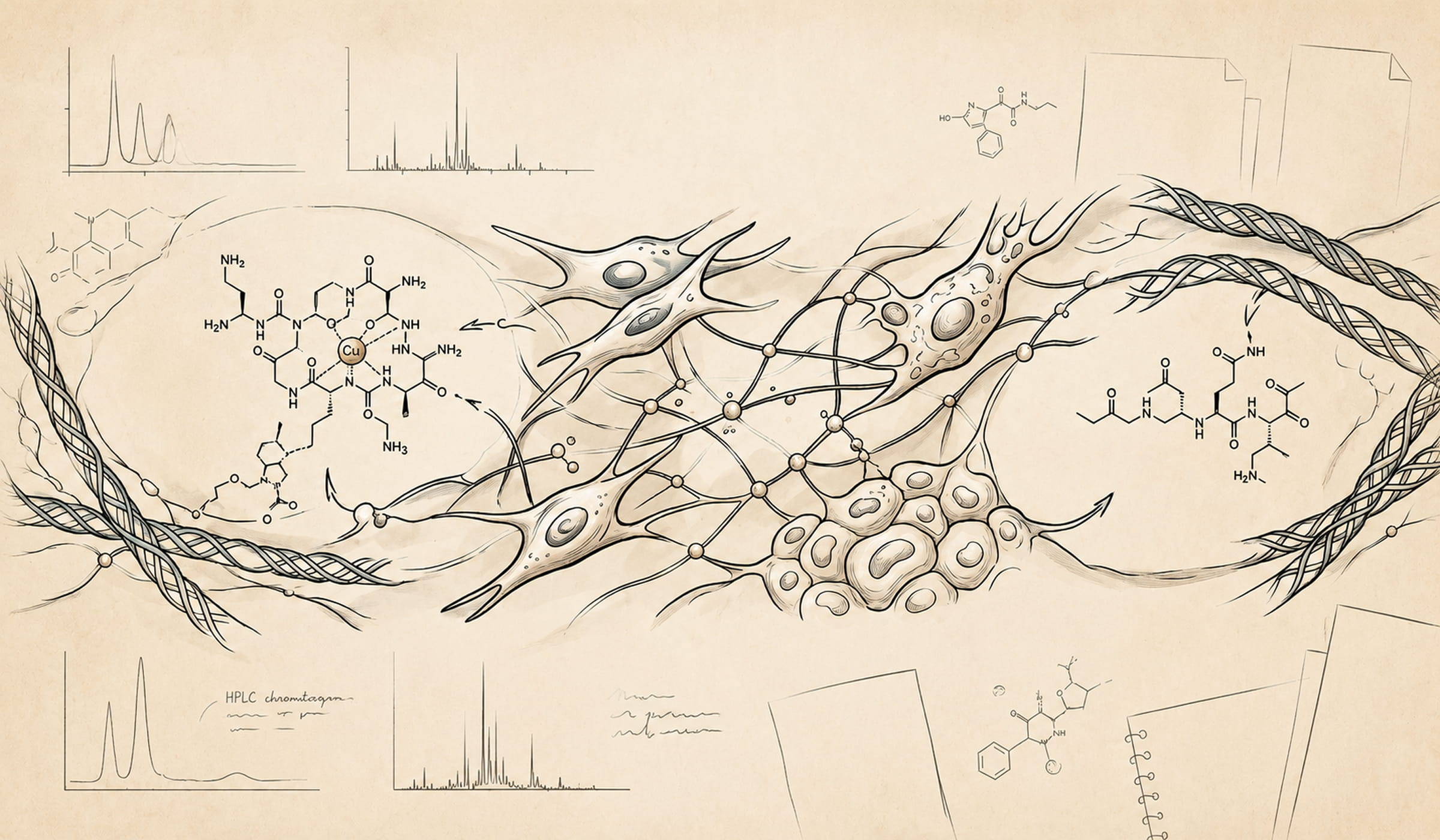
Peptides are one of the most studied categories in skin science, examined in cultured skin cells and model systems for their effects on collagen, the extracellular matrix, and cell signaling. This overview maps which peptides appear in skin research, explains the mechanisms they are associated with, and links to each compound’s reference page. It describes laboratory research and does not describe cosmetic results in people. For a mechanism-first view of the same field, see the companion Cosmetic Research Peptides functional-classes overview.
Skin-science peptide research studies how specific peptides influence skin-cell biology in cultured systems and animal models. The endpoints are collagen and extracellular-matrix components, cell proliferation and migration, and signaling pathways relevant to skin biology. Because these are model systems, the findings describe mechanism rather than consumer cosmetic outcomes.
| Compound | Type | Skin-research association |
|---|---|---|
| GHK-Cu | Copper tripeptide | Collagen and extracellular-matrix biology |
| SNAP-8 | Acetyl octapeptide | Studied in skin-science model systems |
| Copper-peptide and skin blends | Formulated research products | Skin-science research contexts |
The most studied skin-research peptide is GHK-Cu, the copper tripeptide, examined for collagen and extracellular-matrix activity in cell and animal models (Pickart and Margolina, 2018). The copper-peptide complex, rather than the peptide alone, is the unit studied, and its coordination chemistry is part of the research.
SNAP-8, an acetylated octapeptide, is studied in skin-science model systems and is described chemically on its reference page. It is grouped here for its research context, not for any claimed consumer effect.
Research uses cultured skin cells such as fibroblasts and keratinocytes and animal models, with endpoints centered on collagen, matrix components, and signaling. The specific assays vary by compound and by the biology under study, and results are interpreted within those models.
Each compound is verified by HPLC for purity and mass spectrometry for identity, documented on the per-lot Certificate of Analysis. For copper peptides, copper content and stoichiometry are part of the characterization. Identity data should be read from each COA.
Store sealed material cold, shield it from light, and avoid repeated freeze-thaw. Lot-specific stability is documented on the COA; current lot reports are on the Lab Reports page.
All of this work is in cultured cells and model systems, and findings there do not establish cosmetic outcomes in people. Cosmetic-science endpoints in models are not the same as clinical or consumer results, and each compound is best interpreted within its own primary literature rather than as a uniform category.
Copper peptides such as GHK-Cu and acetyl peptides such as SNAP-8.
For collagen and matrix biology in cultured skin cells and animal models.
An acetyl octapeptide studied in skin-science model systems; described chemically on its reference page.
No. They are research-model observations, not statements about cosmetic use.
Because the copper and peptide together define the properties studied.
By HPLC and mass spectrometry, documented on the per-lot Certificate of Analysis.
Sealed, cold, shielded from light, avoiding repeated freeze-thaw; lot-specific stability is on the COA.
Research-use notice: The peptides described here are research chemicals sold for laboratory research use only. They are not for human or veterinary use. Every finding is reported in the specific research context of the cited study.


