Cart

Oops, your cart is still empty
Looks like you haven’t added anything yet. Start exploring our products and find what you need.
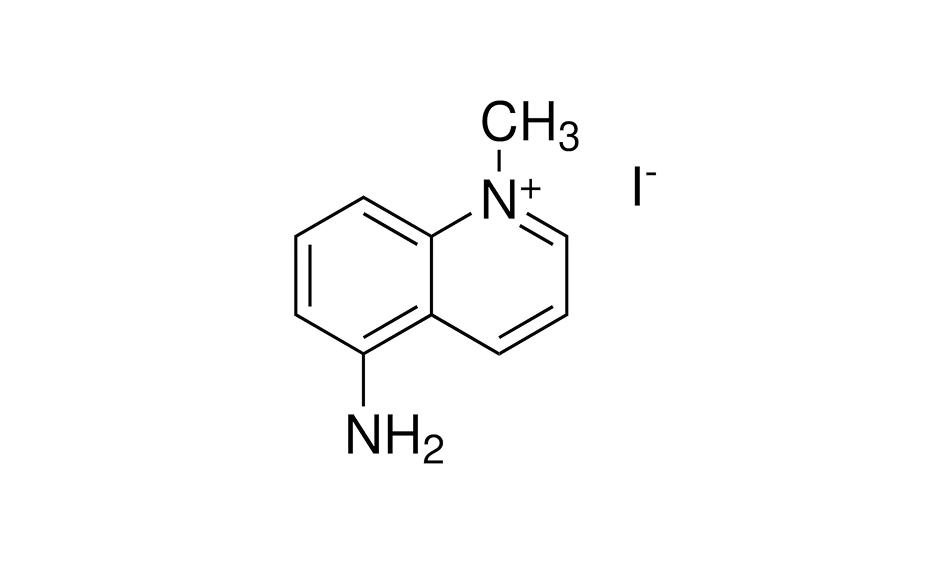
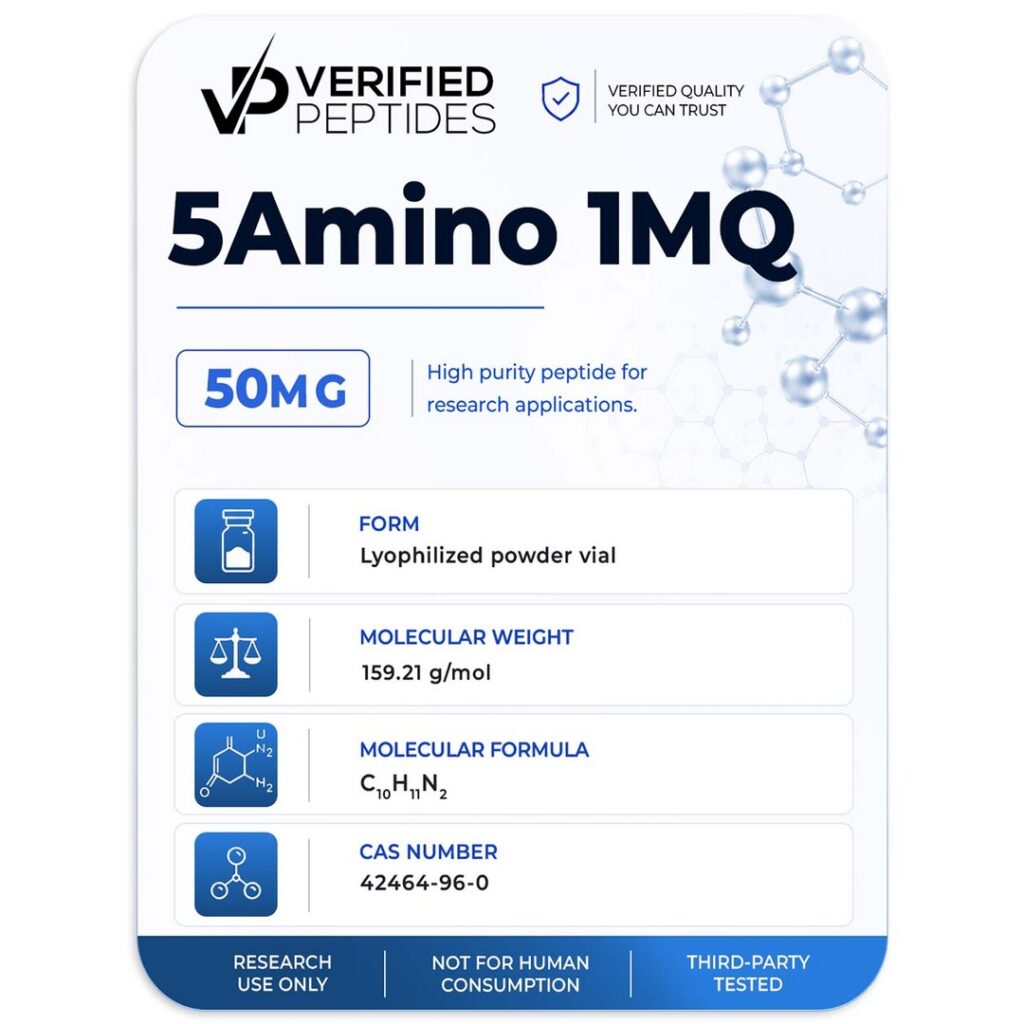
5-Amino-1MQ (5-amino-1-methylquinolinium) is a small-molecule research compound, not a peptide. It is a synthetic quinolinium derivative designed to selectively and reversibly inhibit nicotinamide N-methyltransferase (NNMT), a cytosolic enzyme that transfers a methyl group from S-adenosylmethionine (SAM) to nicotinamide, producing 1-methylnicotinamide (MNA). This distinction matters because much of the peptide research literature it is grouped alongside (e.g., AOD-9604, growth hormone fragments) concerns amino acid chains, whereas 5-Amino-1MQ is a low-molecular-weight heterocyclic organic molecule optimized for cell membrane permeability.
Interest in NNMT as a druggable target grew substantially after Kraus and colleagues reported in Nature (2014) that adipose-selective knockdown of NNMT protected mice against diet-induced obesity, improved glucose tolerance, and elevated NAD+ and SIRT1 activity in fat and liver tissue. NNMT sits at a metabolic crossroads: by consuming SAM and nicotinamide, it simultaneously limits substrate available for other methylation reactions (affecting polyamine flux and histone methylation) and diverts nicotinamide away from the NAD+ salvage pathway. In obese rodents and humans, NNMT expression and activity in adipose tissue are characteristically elevated, and circulating MNA (the reaction product) has been correlated with insulin resistance.
Because genetic knockdown is not a translatable therapeutic strategy, researchers at the University of Texas Health Science Center (Neelakantan, Vance, Wetzel, Watowich, and colleagues) screened a series of quinolinium analogs for selective, membrane-permeable NNMT inhibition. This work, published in Biochemical Pharmacology in 2018, identified 5-Amino-1MQ as a lead compound with low-micromolar potency against NNMT, high selectivity relative to other SAM-dependent methyltransferases, and adequate cell penetration to inhibit intracellular NNMT activity in adipocytes. This established 5-Amino-1MQ as the principal small-molecule tool compound used to pharmacologically test the metabolic hypotheses generated by the earlier genetic knockdown studies.
5-Amino-1MQ binds the nicotinamide-binding pocket of NNMT, competitively blocking the transfer of a methyl group from SAM to nicotinamide. With less nicotinamide diverted to MNA, more substrate becomes available to re-enter the NAD+ salvage pathway via nicotinamide phosphoribosyltransferase (NAMPT). In cultured adipocytes and in adipose tissue of treated mice, this manifests as increased intracellular NAD+ concentrations.
Because NAD+ is an obligate cofactor for sirtuin deacetylases, increased NAD+ availability following NNMT inhibition has been linked to greater SIRT1 activity in preclinical models, with reported downstream effects on PGC-1α deacetylation, mitochondrial biogenesis markers, and AMPK phosphorylation status in adipose and skeletal muscle tissue. These pathways are canonically associated with elevated cellular energy expenditure and fatty-acid oxidation, providing a plausible mechanistic link between NNMT inhibition and the reduced adiposity observed in treated animals, although the full signalling cascade has not been resolved in as much depth as the initial enzymatic inhibition step.
Independent of NAD+ effects, blocking NNMT spares SAM that would otherwise be consumed in nicotinamide methylation. Kraus et al. proposed that this altered flux affects polyamine metabolism and histone methylation status in adipocytes, contributing to a shift in adipocyte gene expression toward a more oxidative, less lipogenic phenotype. This mechanism remains less thoroughly characterised for 5-Amino-1MQ specifically than the NAD+/SIRT1 axis.
In differentiated 3T3-L1 and primary adipocyte cultures, 5-Amino-1MQ treatment reduced NNMT enzymatic activity and MNA production in a concentration-dependent manner, increased intracellular NAD+, and suppressed markers of lipogenesis while leaving cell viability unaffected at the concentrations tested. These in vitro data established the compound’s on-target activity and cell permeability prior to in vivo testing.
The founding pharmacological study administered 5-Amino-1MQ (approximately 20 mg/kg, dosed daily) to diet-induced obese C57BL/6 mice maintained on a high-fat (60% kcal from fat) diet. Treated mice showed a progressive, dose-related reduction in body weight and fat mass relative to vehicle-treated controls, with lean mass and food intake unchanged, indicating the effect was not attributable to appetite suppression. Adipose NNMT activity was reduced in treated animals, consistent with target engagement, and glucose tolerance improved relative to untreated obese controls.
A more recent study (Scientific Reports, 2024) examined NNMT inhibition in the context of skeletal muscle ageing. Aged (22-month-old) mice received once-daily 5-Amino-1MQ for eight weeks, either alone or combined with treadmill exercise. NNMT inhibition improved measures of muscle strength (grip strength), endurance (running distance), and contractile function (torque, fatigue resistance), and appeared to mimic, and in combination, augment, the benefits normally produced by exercise training alone in aged animals. Other rodent work has reported that NNMT inhibition with 5-Amino-1MQ promotes satellite cell proliferation and supports post-injury skeletal muscle regeneration.
Across these studies, effects have been consistent in direction (reduced adiposity, improved glucose handling, improved muscle function in aged animals) but have so far been reported by a relatively small number of overlapping research groups, and independent replication across additional labs and models remains limited.
No peer-reviewed human clinical trials of 5-Amino-1MQ have been published. There is no controlled human data on pharmacokinetics, effective dosing, body-composition outcomes, or metabolic endpoints in people. Claims regarding fat loss or metabolic benefit in humans are, at present, extrapolations from rodent pharmacology and should be treated as hypothesis-generating rather than established.
There is no published human safety or tolerability data for 5-Amino-1MQ; it has not undergone a formal Phase 1 clinical safety trial. The animal studies conducted to date are pharmacological efficacy studies, not dedicated toxicology packages, they report the absence of overt adverse effects (e.g., no unexpected mortality, no gross behavioural abnormality) at the doses tested, but they were not designed with systematic histopathology, long-term carcinogenicity, or reproductive toxicity endpoints. Because NNMT and SAM-dependent methylation intersect with numerous metabolic pathways (polyamine synthesis, histone methylation, one-carbon metabolism), the theoretical potential for off-target or long-term effects has not been systematically ruled out. No data exist on hepatic or renal safety with repeated dosing, drug-drug interactions, or immunogenicity. As a small molecule (rather than a peptide), immunogenicity concerns are lower in principle than for biologics, but this has not been formally tested. 5-Amino-1MQ should be treated strictly as a research chemical with an incomplete safety profile.
5-Amino-1MQ is a selective, cell-permeable small-molecule inhibitor of NNMT that has produced consistent, mechanistically coherent findings in rodent models: reduced NNMT activity, elevated tissue NAD+, reduced adiposity without loss of lean mass or reduced food intake, improved glucose tolerance, and, in a more recent line of research, improved skeletal muscle function in aged mice. The mechanistic rationale linking NNMT inhibition to NAD+ salvage and SIRT1/AMPK signalling is well supported by the broader NNMT literature, including genetic knockdown studies that preceded the pharmacological work. However, the evidence base remains preclinical: no human pharmacokinetic, efficacy, or safety data have been published, and the number of independent research groups reporting positive findings is still small. 5-Amino-1MQ is not an approved drug or dietary supplement in any jurisdiction and holds no regulatory approval for any indication; it is used exclusively as a laboratory research tool.
1. Kraus D, Yang Q, Kong D, et al. Nicotinamide N-methyltransferase knockdown protects against diet-induced obesity. Nature. 2014;508(7495):258-262. doi: 10.1038/nature13198.
2. Liu M, Li L, Chu J, et al. Association of nicotinamide-N-methyltransferase mRNA expression in human adipose tissue and the plasma concentration of its product, 1-methylnicotinamide, with insulin resistance. J Clin Endocrinol Metab. 2015.
3. Neelakantan H, Vance V, Wetzel MD, Wang HL, McHardy SF, Finnerty CC, Hommel JD, Watowich SJ. Selective and membrane-permeable small molecule inhibitors of nicotinamide N-methyltransferase reverse high fat diet-induced obesity in mice. Biochem Pharmacol. 2018;147:141-152. doi: 10.1016/j.bcp.2017.11.007.
4. Neelakantan H, Wang HL, Vance V, Hommel JD, McHardy SF, Watowich SJ. Structure-activity relationship for small molecule inhibitors of nicotinamide N-methyltransferase. J Med Chem. 2017. doi: 10.1021/acs.jmedchem.7b00369.
5. Nicotinamide N-methyltransferase inhibition mimics and boosts exercise-mediated improvements in muscle function in aged mice. Sci Rep. 2024;14. doi: 10.1038/s41598-024-66034-9.
6. NNMT inhibition promotes satellite cell proliferation and muscle regeneration following injury in murine models. Preclinical study, 2020 (secondary literature; verify original citation prior to publication).