Cart

Oops, your cart is still empty
Looks like you haven’t added anything yet. Start exploring our products and find what you need.
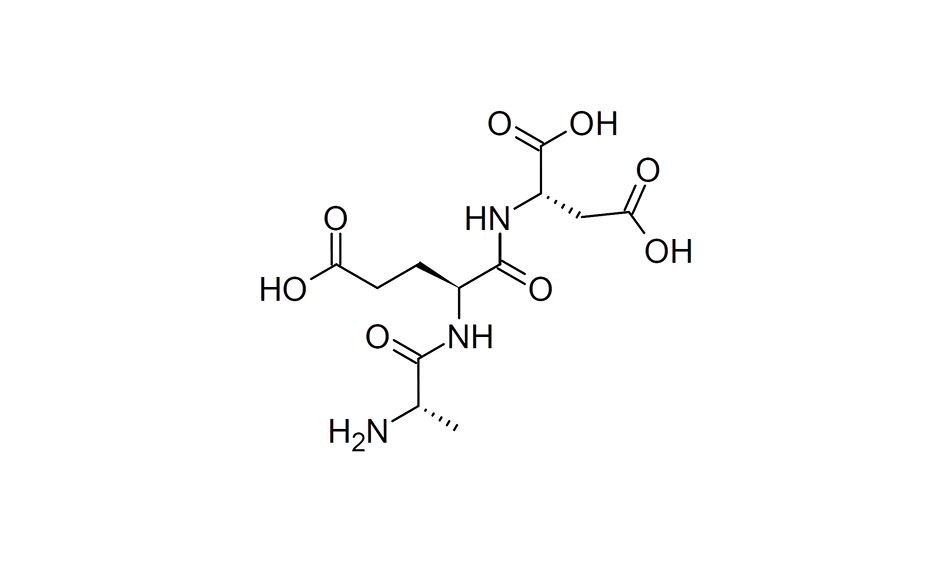
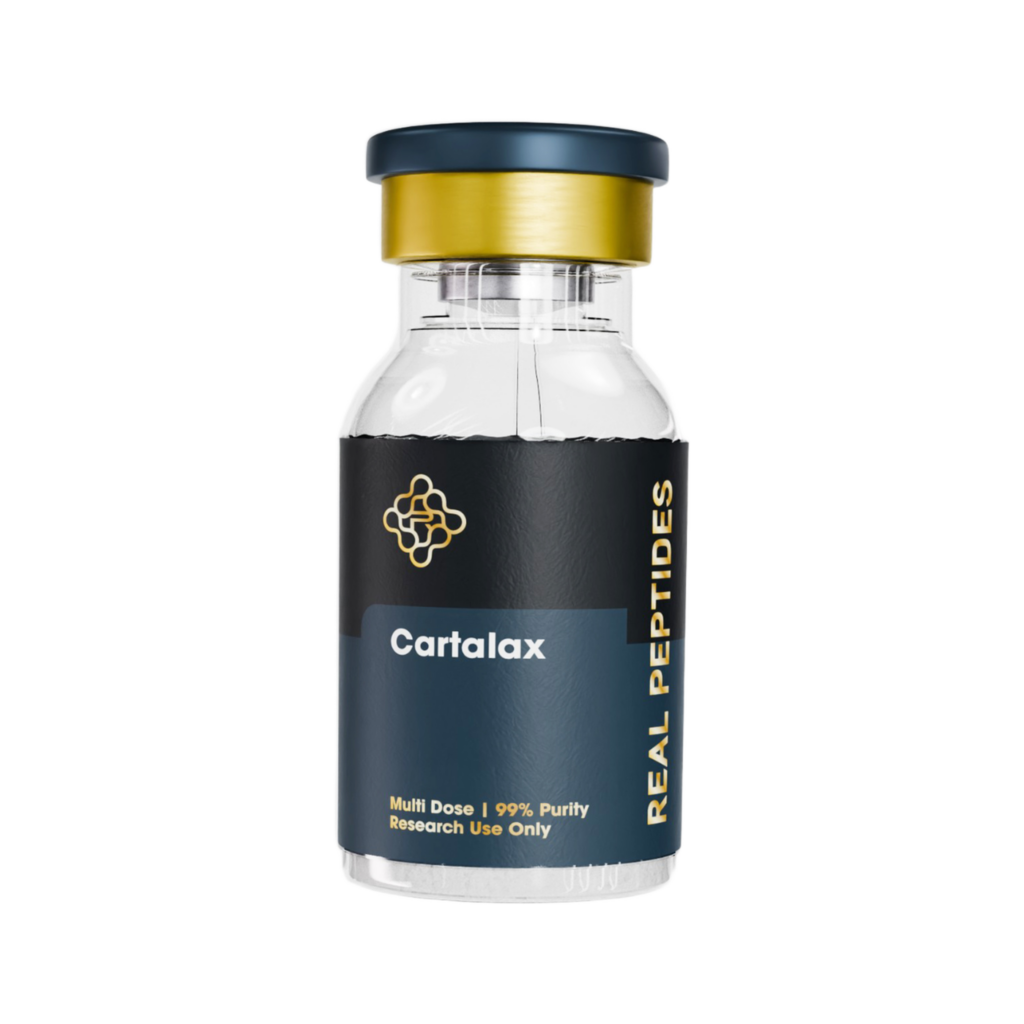
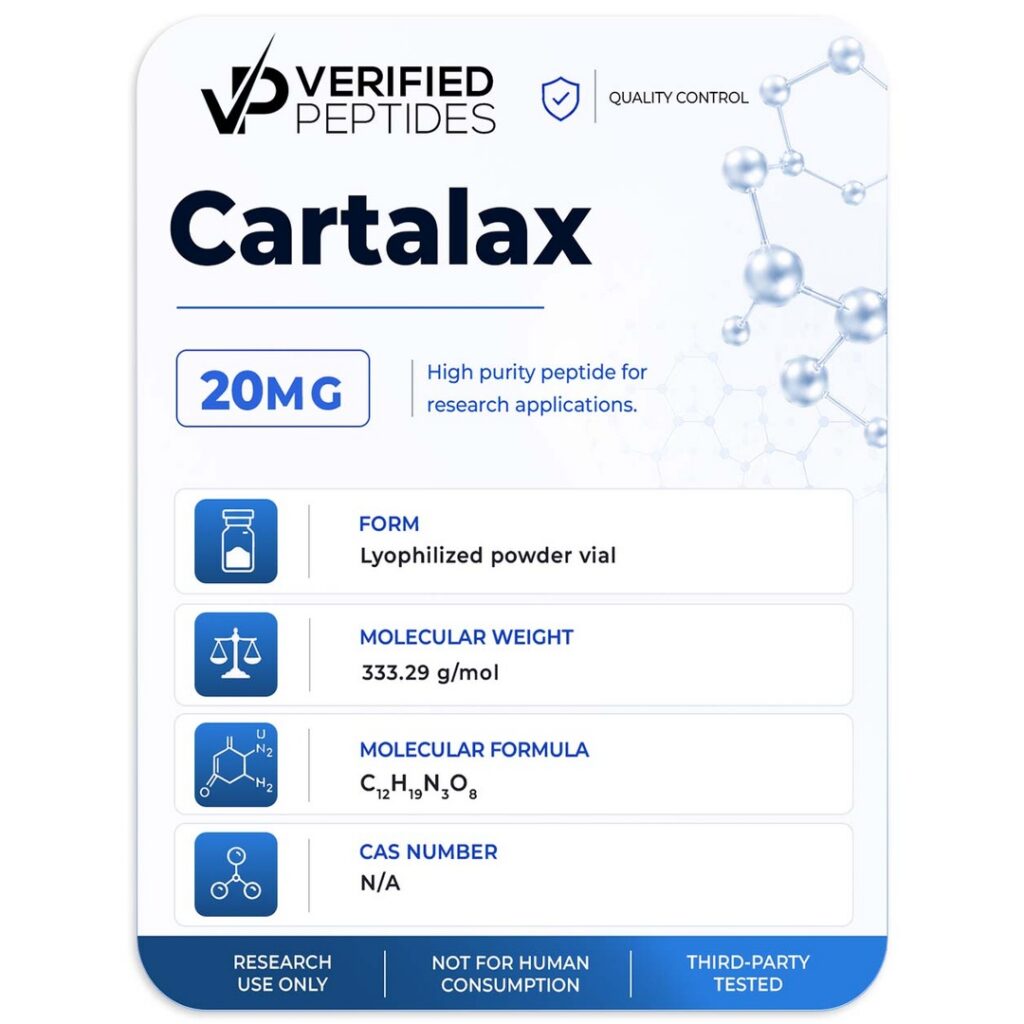
Cartalax is a synthetic short-chain peptide bioregulator belonging to the family of tissue-specific “cytogens” developed at the St. Petersburg Institute of Bioregulation and Gerontology under Professor Vladimir Khavinson, in collaboration with co-investigators Grigoriev, Malinin, and Ryzhak. It is marketed in the research-peptide literature as a dipeptide of alanine and glutamic acid (Ala-Glu), placing it within the same short-peptide chemical class as other Khavinson-group compounds such as Epithalon (Ala-Glu-Asp-Gly) and Bronchogen (Ala-Glu-Asp-Leu). Readers should be aware that vendor and secondary literature on Cartalax is inconsistent: some sources describe it as the dipeptide Ala-Glu, others as a tripeptide (Ala-Glu-Asp), and others still as a tetrapeptide (Ala-Glu-Asp-Lys). This inconsistency reflects the broader problem with the Khavinson bioregulator literature: compound names and sequences circulate through commercial and blog sources far more than through indexed primary chemistry papers, and no single peer-reviewed structural characterization of “Cartalax” specifically could be independently verified at the time of writing.
The bioregulator concept underlying Cartalax originates from decades of Soviet and Russian research into tissue-derived peptide extracts, beginning with polypeptide complexes isolated from calf organs (including cartilage) in the 1970s and 1980s and later distilled down to minimal synthetic di-, tri-, and tetrapeptide fragments believed to retain the tissue-normalizing activity of the parent extracts. Consistent with this lineage, Khavinson and colleagues hold an internationally filed patent family covering “a pharmaceutical substance normalizing cartilaginous tissue functions” and a related peptide “normalizing osseous and cartilaginous tissue metabolism” (Eurasian patents EA 010724 and EA 010574, Khavinson, Grigoriev, Malinin, Ryzhak, 2008). Cartalax is the commercial/research name most commonly associated with this cartilage-and-bone-tissue patent lineage. Researchers’ interest in the compound stems from the general hypothesis, common to the whole Khavinson bioregulator series, that short peptides can act as epigenetic-like regulators of tissue-specific gene transcription, and that a cartilage-directed peptide could therefore have relevance to age-related connective-tissue decline, osteoarthritis, and osteoporosis research models.
The mechanistic model proposed for Cartalax follows the general “peptide-gene” hypothesis advanced by Khavinson’s group for its bioregulator series: short peptides of this class are proposed to associate with chromatin/DNA regulatory regions in a tissue-selective manner, thereby modulating transcription of genes relevant to the target tissue. For a cartilage-directed bioregulator, the specific hypothesis is that the peptide upregulates expression of structural cartilage matrix genes (type II collagen, aggrecan) in chondrocytes while suppressing catabolic mediators (matrix metalloproteinases) that drive cartilage breakdown. It is important to note that this transcriptional mechanism has been demonstrated more rigorously for other members of the Khavinson series (e.g., Epithalon’s effects on telomerase and pineal gene expression) than it has for the cartilage-specific bioregulator itself; independent, English-language, peer-reviewed confirmation of Cartalax’s direct DNA-binding activity was not identified.
The strongest available experimental support comes from studies using a “cartilage preparation” (a peptide extract of cartilaginous tissue, of which the synthesized short peptide is presented as the active/representative principle) rather than from the pure synthetic dipeptide itself. In this framework, the mechanism proposed is a normalization of the bone remodeling balance, supporting osteoblast-mediated bone formation while blunting age- and estrogen-loss-driven bone resorption, alongside a parallel, tissue-specific action on cartilage matrix turnover.
No independently verifiable in vitro (cell culture) data specific to the isolated Cartalax peptide were located in indexed, English-language journals. Commercial and blog literature describes chondrocyte gene-expression assays showing upregulation of collagen type II and aggrecan transcripts, but these claims could not be traced to a citable, peer-reviewed source at the time of writing and should be treated as unverified.
The most substantive citable evidence comes from a study of peptide bioregulators on bone tissue in ageing, ovariectomized rats, a standard model of postmenopausal osteoporosis. Povorozniuk, Khavinson, and colleagues compared a cartilage-tissue-extract peptide preparation and a separate substance (“T-31”) on bone mineral density in ovariectomized Wistar rats, using photon absorptiometry to assess bone density. Both preparations demonstrated an osteoprotective effect, attenuating the bone density loss induced by ovariectomy and partially restoring density in rats with established loss, with the cartilage-derived preparation showing significantly greater efficacy than the comparator substance. This study supports a bone/cartilage-protective effect of Khavinson-lineage cartilage bioregulators in an aged rodent model, though it examined a tissue extract preparation rather than a single, chemically defined dipeptide, and it was published only with a Russian-language full text and English abstract.
Commercial sources reference an unspecified “clinical study” establishing effectiveness of adjunctive Cartalax use in patients with spinal osteochondrosis, osteoarthrosis, and osteoporosis, and in post-fracture recovery. As with almost all clinical claims surrounding the Khavinson bioregulator series, this study (if it exists) has not been located in indexed, peer-reviewed, English-language literature with an extractable design, sample size, or outcome measure. No randomized controlled trial, PMID, or ClinicalTrials.gov registration for Cartalax specifically was identified. Readers should treat any claim of clinical efficacy in humans as unverified pending publication in an indexed journal.
There is no explicit, peer-reviewed safety or toxicology data on Cartalax as an isolated compound. No dose-ranging toxicology study, no genotoxicity or carcinogenicity assessment, and no formal human adverse-event data were identified in the literature searched. General statements in Khavinson-group publications describe short peptide bioregulators as having shown a favorable long-term safety record across decades of use in Russian clinical settings, but these statements are not substantiated by data that meets the standards of independent, indexed toxicological review. As a research chemical, Cartalax has no regulatory approval for human or veterinary use in the United States, European Union, or United Kingdom, and it is not evaluated by any medicines regulator for safety or efficacy. It should be handled strictly as a laboratory research reagent, not administered to humans or animals outside of a properly authorized research protocol.
Cartalax sits at the sparse end of the evidence spectrum even by the standards of the Khavinson bioregulator family. Its proposed identity as a short Ala-Glu-based peptide is consistent with the broader “AEDG-type” naming convention used across the St. Petersburg group’s cartilage- and bone-tissue patent portfolio (EA 010724, EA 010574), but the exact amino acid sequence attributed to “Cartalax” varies across secondary sources, and no single authoritative structural reference could be independently confirmed. The most citable supporting evidence is a peer-reviewed (Russian-language, English-abstracted) study showing an osteoprotective effect of a related cartilage-tissue-extract peptide preparation in ovariectomized rats, a relevant but indirect line of evidence. Beyond this, almost all remaining information about Cartalax, its mechanism, its chondrocyte gene-expression claims, and any purported clinical study, originates from commercial peptide-vendor content rather than from indexed scientific publications, exactly as is the case for other Khavinson-lineage compounds such as Epithalon. There is no independently verified human clinical trial data, no formal safety/toxicology profile, and no regulatory approval anywhere in the world. Cartalax should currently be regarded as a research-stage compound of biological interest within the Khavinson bioregulator hypothesis, requiring substantially more independently reproduced, peer-reviewed work, ideally including a definitive structural characterization, before its proposed cartilage-protective activity can be considered established.
1. Khavinson VKh. Peptides and Ageing. Neuro Endocrinol Lett. 2002;23(Suppl 3):11-144.
2. Khavinson VKh, Grigoriev EI, Malinin VV, Ryzhak GA. Pharmaceutical substance normalizing cartilaginous tissue functions and method for producing the same. Eurasian Patent EA 010724, issued 30.10.2008.
3. Khavinson VKh, Grigoriev EI, Malinin VV, Ryzhak GA. Peptide normalizing osseous and cartilaginous tissue metabolism, pharmacological substance based thereon and method of its application. Eurasian Patent EA 010574, issued 30.10.2008.
4. Povorozniuk VV, Khavinson VKh, Makogonchuk AV, Ryzhak GA, Kreslov EA, Gopkalova IV. Effect of peptide regulators on the structural and functional status of bone tissue in ageing rats. Adv Gerontol (Uspekhi Gerontologii). 2007;20(2):134-137. PMID: 18306703.
5. Khavinson VKh, Diomede F, Mironova E, et al. Peptide Regulation of Gene Expression: A Systematic Review. Molecules. 2021;26(22):7053. doi: 10.3390/molecules26227053.
6. Anisimov VN, Khavinson VKh. Peptide bioregulation of aging: results and prospects. Biogerontology. 2010;11(2):139-149. doi: 10.1007/s10522-009-9249-8.