Cart

Oops, your cart is still empty
Looks like you haven’t added anything yet. Start exploring our products and find what you need.
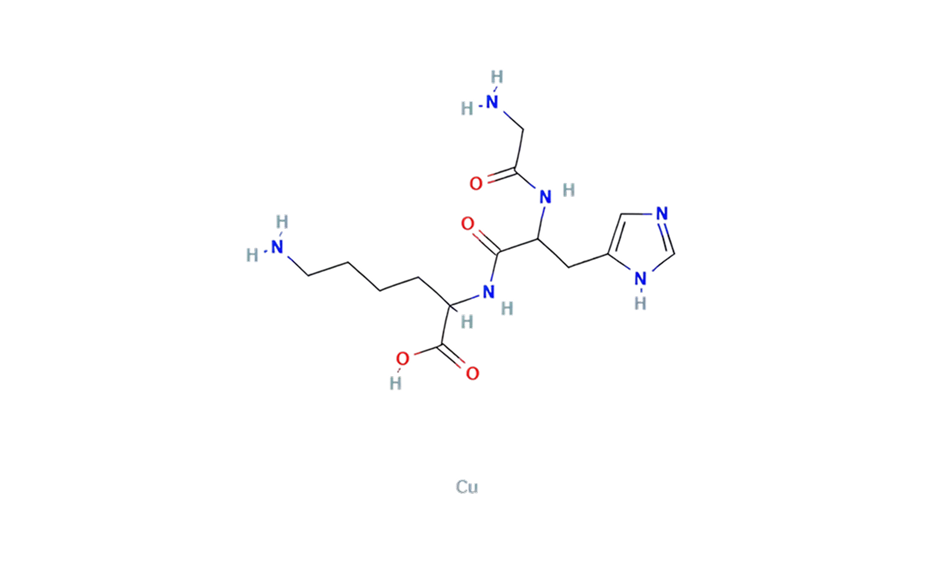
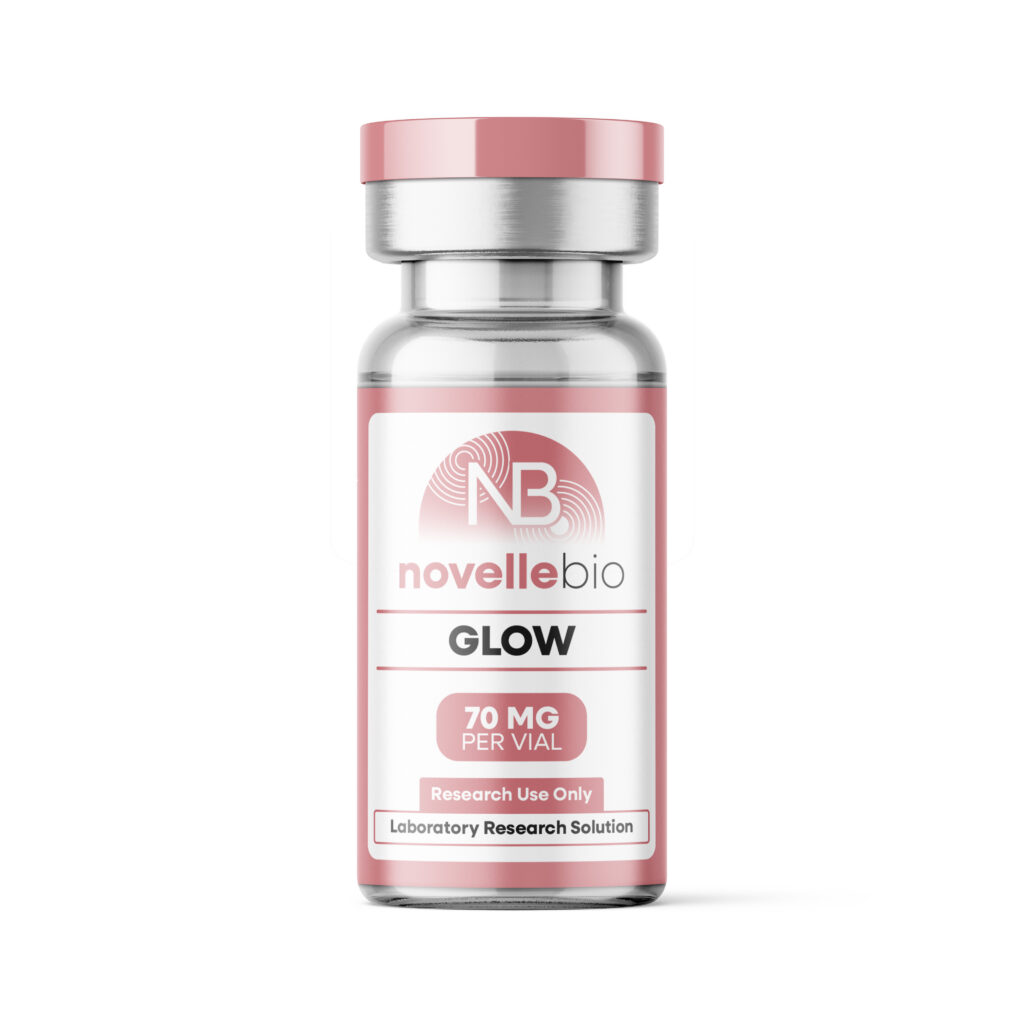
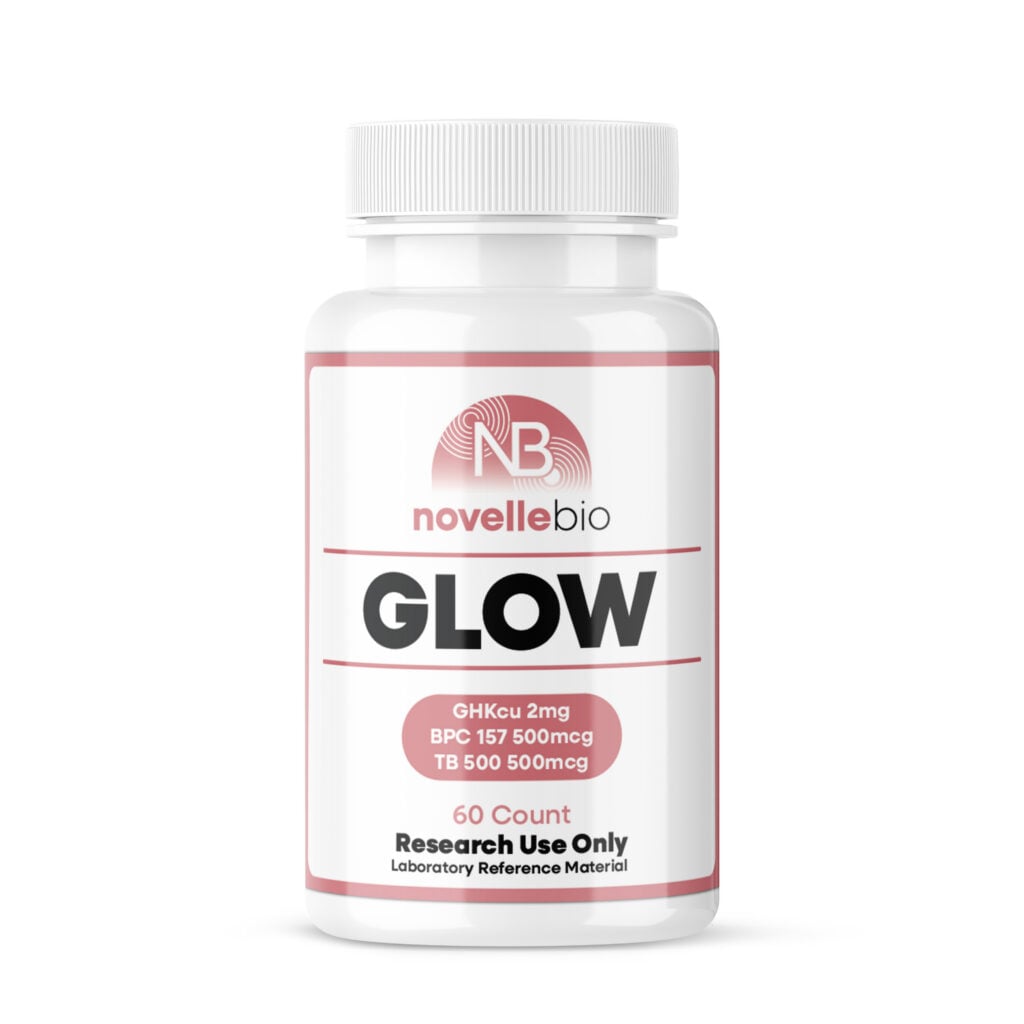
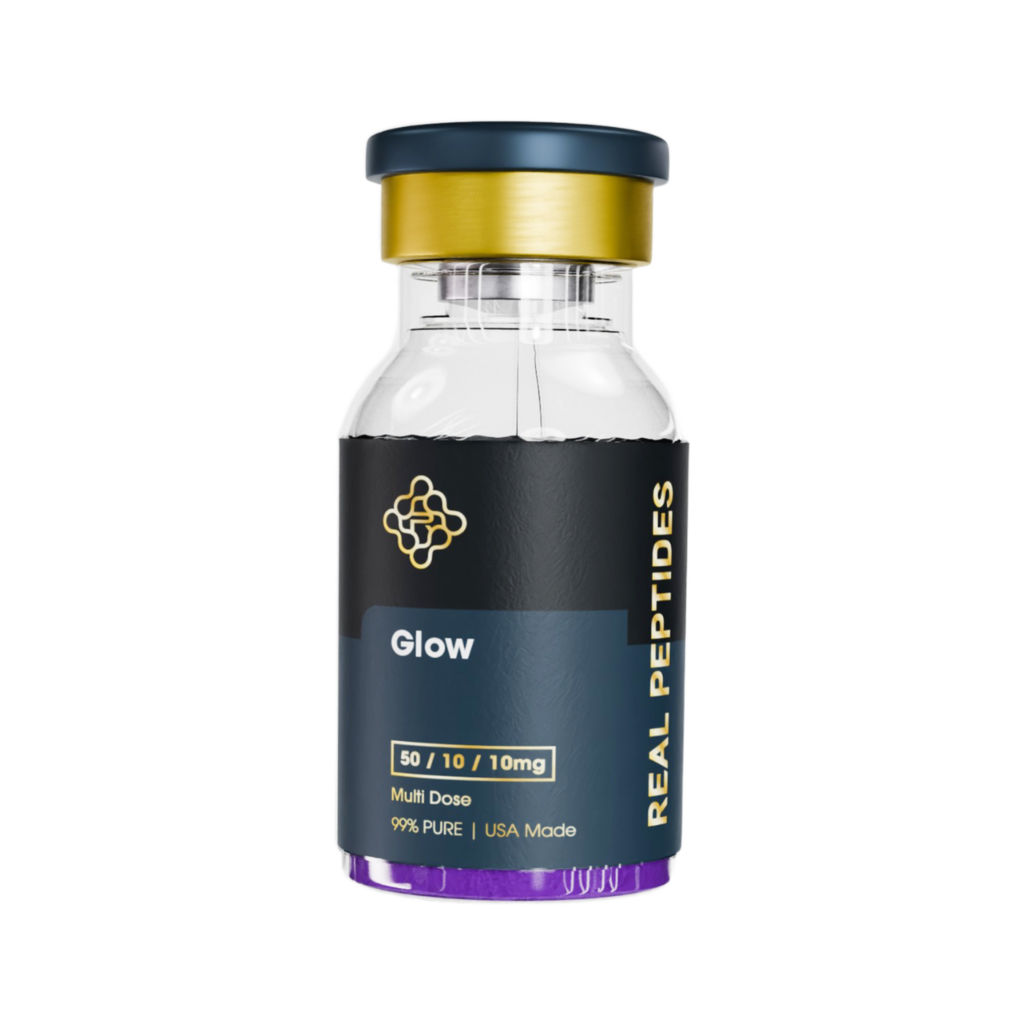
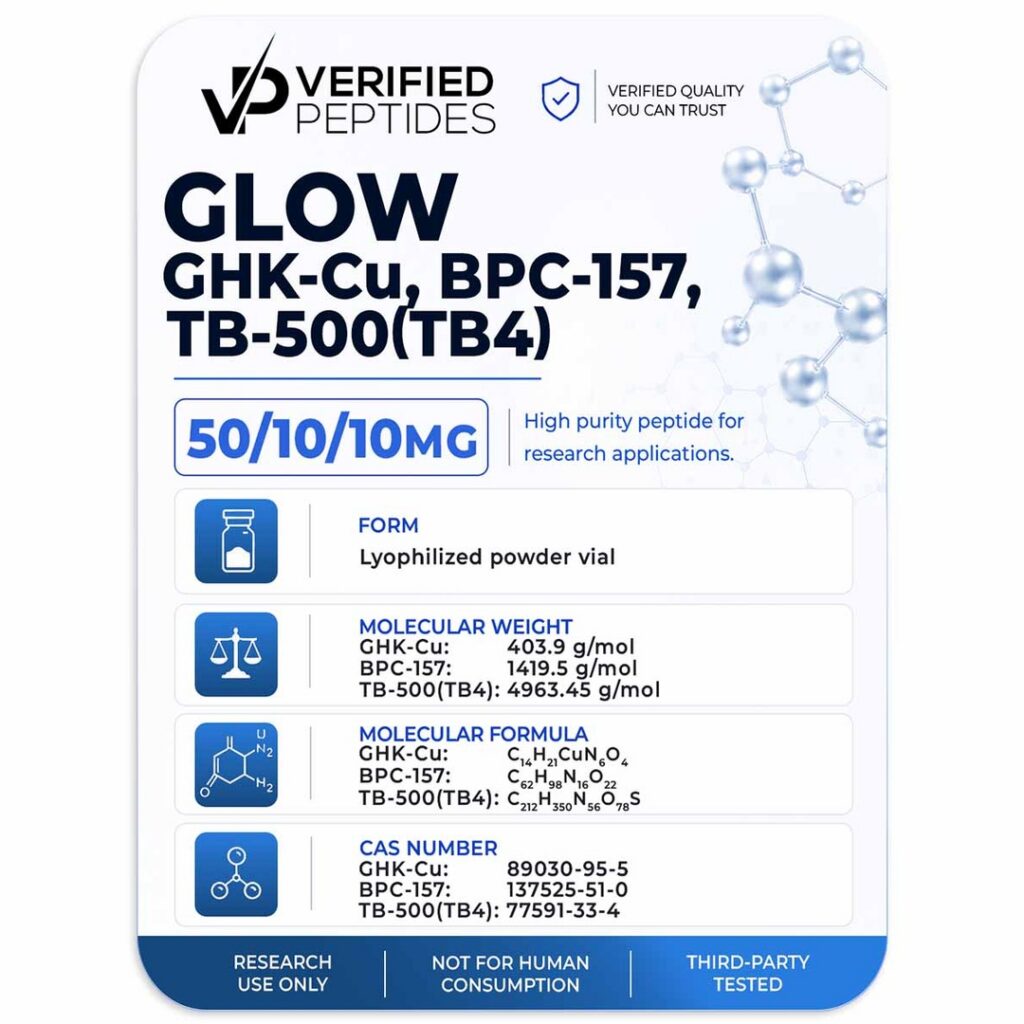
The GLOW Blend is not a single isolated peptide but a combination research product, formulated by bringing together three separately characterised peptides that are each independently studied for roles in tissue repair, angiogenesis, and dermatological/connective-tissue regeneration: GHK-Cu (the copper complex of the tripeptide glycyl-L-histidyl-L-lysine), BPC-157 (a synthetic pentadecapeptide based on a fragment of a protective protein found in gastric juice), and TB-500 (a synthetic peptide corresponding to the actin-binding domain of thymosin beta-4). Vendor formulations of “GLOW” vary, but the composition most commonly marketed in the peptide research space is a 5:1:1 ratio by mass, typically supplied as roughly 50 mg GHK-Cu combined with 10 mg BPC-157 and 10 mg TB-500 per vial, reflecting GHK-Cu’s role as the dominant constituent by mass with BPC-157 and TB-500 included at lower, matched quantities. Because composition is vendor-defined rather than governed by any pharmacopeial or regulatory standard, researchers should treat the precise ratio, purity and formulation of any given “GLOW” product as specific to its supplier rather than a fixed, universally agreed specification.
Critically, the rationale for combining these three peptides is a hypothesis about complementary, non-overlapping mechanisms, GHK-Cu’s actions on gene expression, collagen synthesis and antioxidant defence; BPC-157’s actions on angiogenesis and cytoprotection; and TB-500’s actions on actin dynamics and cell migration, rather than any body of research on the blend as a combined formulation. No peer-reviewed pharmacological, toxicological, or efficacy studies of the co-administered three-peptide combination itself have been published. All of the evidence discussed below pertains to each constituent peptide studied in isolation; none of it demonstrates that combining the three produces additive, synergistic, or even unchanged effects relative to any single component. This is an important and unresolved evidence gap that researchers evaluating this product should bear in mind.
GHK-Cu is a naturally occurring tripeptide-copper(II) complex first isolated from human plasma in 1973 by biochemist Loren Pickart, who observed that plasma from younger individuals promoted greater regenerative activity in liver tissue explants than plasma from older individuals, and traced this activity to the small peptide fragment glycyl-L-histidyl-L-lysine complexed with copper. Plasma GHK-Cu concentrations decline with age and rise sharply at sites of tissue injury, which is the original basis for interest in its wound-healing properties.
A 2015 review by Pickart and colleagues catalogued GHK-Cu’s ability to up- or down-regulate very large numbers of genes associated with tissue remodelling, antioxidant defence, and anti-inflammatory pathways, including reversal of gene-expression signatures associated with chronic lung tissue damage in vitro. GHK-Cu has also been shown to upregulate TGF-beta signalling components in dermal fibroblasts, sensitising them to pro-collagen signals.
In dermal fibroblast cultures, GHK-Cu increases type I and III collagen and glycosaminoglycan synthesis and modulates matrix metalloproteinase (MMP) and tissue inhibitor of metalloproteinase (TIMP) expression. In a controlled human trial of topical copper tripeptide following CO2 laser resurfacing, treated skin showed improved healing parameters compared with control. A separate clinical study of topical GHK-Cu preparations reported measurable increases in collagen synthesis in the majority of volunteers, outperforming comparator topical agents in that trial. These human data pertain specifically to topical dermatological application, not to systemic or injectable use.
BPC-157 (“body protection compound-157”) is a synthetic pentadecapeptide corresponding to a 15-amino-acid fragment of a larger protein identified in human gastric juice. It has been studied predominantly by a single research group based at the University of Zagreb, led by Predrag Sikiric, across several decades, with growing but still limited independent replication.
BPC-157 is proposed to promote healing through upregulation of vascular endothelial growth factor receptor 2 (VEGFR2) signalling and modulation of the nitric oxide (NO) system, both of which support new blood vessel formation (angiogenesis) at sites of tissue injury. It has also been shown to upregulate growth hormone receptor expression in tendon fibroblasts in vitro, proposed as a contributing mechanism in tendon-healing models.
In rat models of Achilles tendon-to-bone detachment, BPC-157 administration was associated with accelerated tendon outgrowth, increased fibroblast density, earlier collagen alignment and greater neovascularisation compared with untreated controls, and opposed the impairment of healing produced by corticosteroid co-administration. Other rodent studies have reported accelerated healing in models of colitis and other gastrointestinal injury, muscle transection, and ligament injury. Virtually all of this evidence derives from rat and mouse models; comparative anatomy differences (rodent tendons are structurally simpler and heal faster than human tendons) limit direct extrapolation to human outcomes.
Published human clinical trial data for BPC-157 are essentially absent. It is not approved by the FDA for any indication, has been explicitly flagged by the FDA as posing safety concerns in the compounding context, and is included on prohibited-substance lists in competitive sport due to its unapproved status and unresolved safety profile.
TB-500 is a synthetic peptide corresponding to the actin-binding domain of thymosin beta-4 (Tb4), a 43-amino-acid protein and one of the most abundant intracellular actin-binding proteins in mammalian cells.
Thymosin beta-4 binds monomeric G-actin with high affinity (Kd approximately 0.5 to 0.7 uM), sequestering it and regulating its availability for polymerisation into filamentous (F-actin) structures required for cell migration. This cytoskeletal regulatory role is proposed to underlie downstream effects on the migration of keratinocytes, fibroblasts, endothelial cells and progenitor/stem cells toward sites of injury, as well as pro-angiogenic and anti-inflammatory signalling associated with the intact Tb4 protein.
In a rat full-thickness dermal wound model, topical or intraperitoneal thymosin beta-4 increased re-epithelialisation by 42% over saline controls at day 4 and by up to 61% at day 7, increased wound contraction, and was associated with greater collagen deposition and angiogenesis in treated wounds; Tb4 also stimulated keratinocyte migration in vitro in Boyden chamber assays.
RegeneRx Biopharmaceuticals developed a pharmaceutical-grade formulation of full-length thymosin beta-4 (RGN-259) and tested it in human trials for dry eye disease and corneal injury; a phase II trial reported significant improvement in signs and symptoms of dry eye with topical 0.1% Tb4 and no reported adverse events, though later phase III (ARISE-1/ARISE-2) trials showed mixed results against pre-specified regulatory endpoints. It is important to note that these human trials used full-length, 43-amino-acid recombinant thymosin beta-4 in a pharmaceutical formulation, which is chemically distinct from the truncated synthetic fragment marketed as “TB-500” in the research-peptide trade; no comparable human clinical trial programme exists for TB-500 itself.
No toxicological, pharmacokinetic, or safety studies of the three-peptide GLOW combination exist. Safety data are available only for the individual constituents studied in isolation, and even those datasets are markedly uneven: GHK-Cu has a comparatively large topical human-use safety record; BPC-157 has essentially no published human safety data and carries explicit FDA safety concerns in the compounding context; TB-500 itself (as distinct from full-length thymosin beta-4) has no human clinical safety record at all. Combining multiple bioactive peptides in a single research preparation introduces additional unknowns, including potential pharmacokinetic interactions, additive off-target effects, and compounded impurity/endotoxin risk from multi-component manufacturing, that have not been studied for this or any comparable blend. No dosing, administration route, or duration guidance from human studies exists for this combination, and none should be inferred from the individual-peptide data summarised above.
The GLOW Blend is a commercially assembled combination of three peptides that each have a distinct, independently published research literature relevant to tissue repair, but the blend itself has never been studied as a combined formulation. GHK-Cu has the most mature evidence base, including controlled human topical trials; BPC-157 and TB-500 rest almost entirely on rodent and in vitro data, with BPC-157 carrying documented regulatory safety concerns and TB-500 lacking any human trial programme distinct from the pharmaceutical-grade full-length protein tested by RegeneRx. Researchers should treat the rationale for this blend as a mechanistic hypothesis, that gene-regulatory, angiogenic, and cytoskeletal-remodelling pathways might act complementarily, rather than as an evidence-supported claim, and should evaluate each constituent’s literature and limitations independently rather than assuming the combination has been validated as a whole.
1. Pickart L, Vasquez-Soltero JM, Margolina A. Regenerative and Protective Actions of the GHK-Cu Peptide in the Light of the New Gene Data. BioMed Res Int. 2018.
2. Pickart L, Margolina A. Regenerative and Protective Actions of the GHK-Cu Peptide in the Light of the New Gene Data. Int J Mol Sci. 2018;19(7):1987.
3. Effects of GHK-Cu on MMP and TIMP Expression, Collagen and Elastin Production, and Facial Wrinkle Parameters. J Aging Sci.
4. Finney R, et al. Effects of Topical Copper Tripeptide Complex on CO2 Laser-Resurfaced Skin. Arch Facial Plast Surg. 2006;8(4):252-259.
5. Abdulghani AA, et al. Effects of topical creams containing vitamin C, a copper-binding peptide cream, and a placebo on photodamaged skin. Dis Manag Clin Outcomes. 1998.
6. Sikiric P, Seiwerth S, Rucman R, et al. Stable Gastric Pentadecapeptide BPC 157 as a Therapy and Safety Key: A Special Beneficial Pleiotropic Effect Controlling and Modulating Angiogenesis and the NO-System. Pharmaceuticals. 2025;18(6):928.
7. Krivic A, Anic T, Seiwerth S, et al. Pentadecapeptide BPC 157 Enhances the Growth Hormone Receptor Expression in Tendon Fibroblasts. J Orthop Res. 2019.
8. Staresinic M, Sebecic B, Patrlj L, et al. Gastric pentadecapeptide BPC 157 accelerates healing of transected rat Achilles tendon and in vitro tendon cell growth. J Orthop Res. 2003;21(6):976-983.
9. Seiwerth S, Rucman R, Turkovic B, et al. BPC 157 and standard angiogenic growth factors: gastrointestinal tract and wound healing. Curr Med Chem. 2018;25(16):1972-1989.
10. U.S. Anti-Doping Agency (USADA). BPC-157: Experimental Peptide Creates Risk for Athletes. usada.org.
11. Xue B, Leyrat C, Grimes JM, Robinson RC. Structural basis of thymosin-beta4/profilin exchange leading to actin filament polymerization. Proc Natl Acad Sci USA. 2014;111(43):E4596-E4605.
12. Malinda KM, Sidhu GS, Mani H, et al. Thymosin beta4 accelerates wound healing. J Invest Dermatol. 1999;113(3):364-368.
13. Sosne G, Ousler GW. Thymosin beta 4 ophthalmic solution for dry eye: a randomized, placebo-controlled, Phase II clinical trial conducted using the controlled adverse environment (CAE) model. Clin Ophthalmol. 2015;9:877-884.