Cart

Oops, your cart is still empty
Looks like you haven’t added anything yet. Start exploring our products and find what you need.
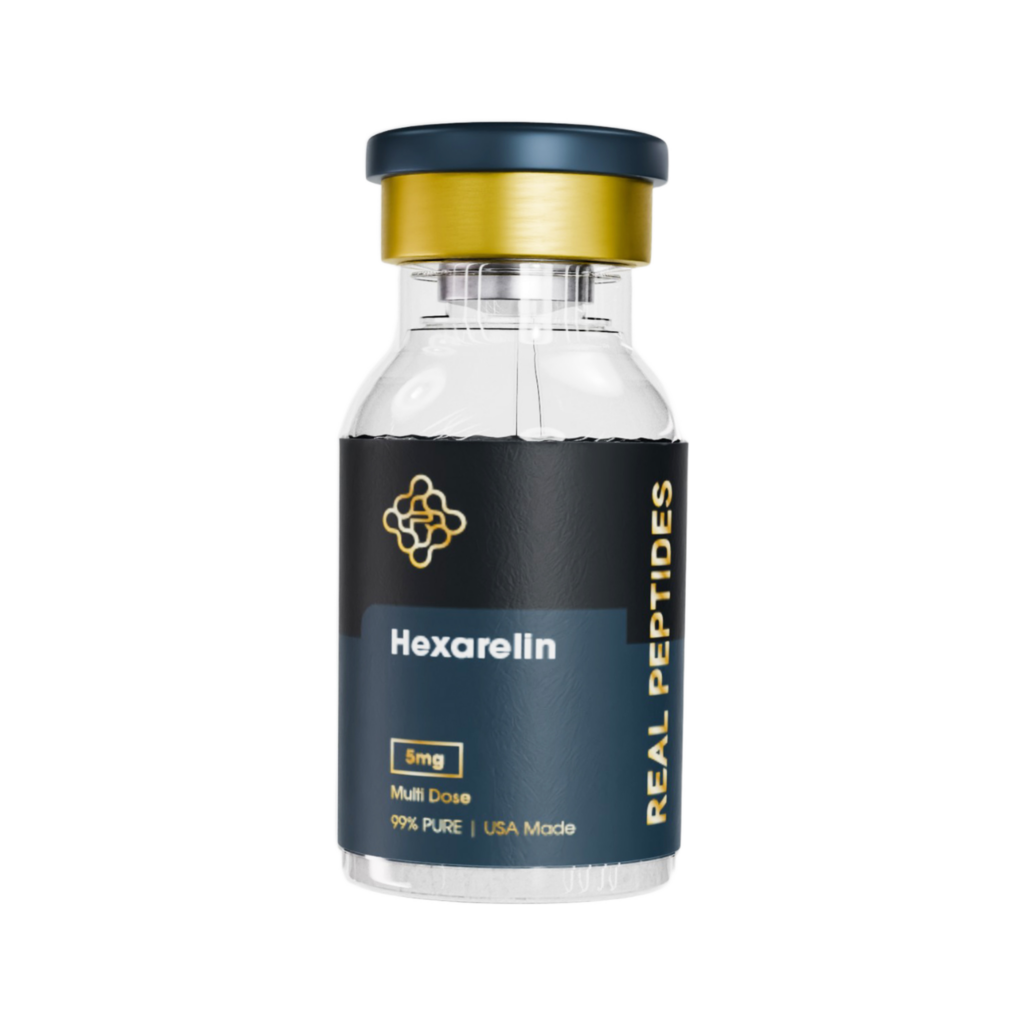
Hexarelin is a synthetic hexapeptide belonging to the growth hormone-releasing peptide (GHRP) family, with the sequence His-D-2-methyl-Trp-Ala-Trp-D-Phe-Lys-NH2. It was developed in the early 1990s as a more potent and metabolically stable successor to GHRP-6. GHRP-6 was the first synthetic peptide shown, in 1984, to dose-dependently release growth hormone (GH) in vitro and in vivo. This occurred through a mechanism entirely independent of growth hormone-releasing hormone (GHRH). Hexarelin’s compact, D-amino-acid-containing structure confers relative resistance to enzymatic degradation compared with longer peptide GH secretagogues.
Hexarelin belongs to the same pharmacological family as ghrelin, the endogenous ligand later discovered, in 1999, to activate the same receptor. Synthetic GHRPs like hexarelin had already been characterised against this receptor for over a decade. Researchers have used hexarelin extensively since the 1990s as a pharmacological tool to probe GH secretory dynamics in ageing, obesity, and GH-deficiency states. More recently, it has also been used to investigate a distinct, GH-independent cardioprotective and cytoprotective pharmacology mediated through a separate binding site.
Hexarelin binds with high affinity to the growth hormone secretagogue receptor (GHS-R1a), the same receptor later identified as the ghrelin receptor. This receptor is expressed on somatotroph cells of the anterior pituitary and in the hypothalamus. Receptor binding activates the Gαq/11 pathway, stimulating phospholipase C, generating inositol trisphosphate (IP3), mobilising intracellular calcium, and triggering exocytosis of GH-containing secretory vesicles. This mechanism is pharmacologically distinct from, and synergistic with, GHRH-receptor-mediated GH release. This explains the additive GH responses seen when hexarelin and GHRH are co-administered in human studies.
A substantial body of rodent research describes cardioprotective and cytoprotective effects of hexarelin that persist in hypophysectomised (pituitary-ablated) animals lacking a functioning GH axis. This indicates a mechanism independent of GH release. This activity has been attributed to hexarelin binding at the CD36 scavenger receptor on cardiomyocytes and other cell types. This binding engages downstream pro-survival signalling, including PI3K/Akt and ERK1/2 pathways, that limits apoptosis during ischaemic stress.
Alongside GH release, hexarelin administration produces dose-dependent, transient increases in adrenocorticotropic hormone (ACTH), cortisol, and prolactin in human studies, indicating cross-talk with corticotroph and lactotroph pituitary populations. This is regarded as an on-target but non-GH-axis effect of GHS-R1a family agonists rather than an off-target artefact.
In cultured neonatal rat cardiomyocytes exposed to angiotensin II, hexarelin (0.1 micromol/L) significantly reduced apoptosis and DNA fragmentation and increased cell viability. These effects were assessed by TUNEL staining, flow cytometry, DNA laddering, and MTT assay (Bedendi I, et al., Eur J Pharmacol. 2003 and related cardiomyocyte studies).
Hexarelin also protected H9c2 cardiomyocytes from doxorubicin-induced cell death in vitro (Kwan J, et al., Endocrine 2001). Separately, hexarelin (1.0 micromol/L) reduced streptozotocin-induced cytotoxicity in pancreatic beta-cell culture, implicating mitochondrial signalling pathways. In Neuro-2A neuronal cells, hexarelin also modulated MAPK and PI3K/Akt signalling to inhibit hydrogen-peroxide-induced apoptotic toxicity.
In hypophysectomised rats subjected to coronary ischaemia-reperfusion, subcutaneous hexarelin (80 microg/kg for 7 days) prevented exacerbation of ischaemia-reperfusion damage, despite the absence of a functioning GH axis. This effect was not reproduced by a control GHRP that does not bind cardiac tissue, supporting a GH-independent, cardiac-receptor-mediated mechanism (Locatelli V, et al. Endocrinology. 1999;140(9):4024-4031).
A separate rat model of experimental myocardial infarction found that hexarelin improved cardiac function following coronary ligation (Bisi G, et al., cited in cardiovascular GHS literature). More recent rodent work reports that hexarelin attenuates coronary-ligation-induced heart failure via modulation of PTEN signalling. It also reduces apoptosis in an ischaemic acute kidney injury model via the MDM2/p53 pathway. These animal datasets are the primary evidentiary basis for hexarelin’s proposed cardioprotective and cytoprotective properties. They have not been replicated in large-animal or long-duration models.
Hexarelin’s human pharmacology was extensively characterised by Italian endocrinology groups (principally E. Ghigo and colleagues) through the 1990s. A double-blind, placebo-controlled, rising-dose study in 12 healthy young men found that intravenous hexarelin (0.5, 1, and 2 microg/kg) produced dose-dependent GH release. Mean peak GH concentrations were 26.9, 52.3, and 55.0 ng/mL respectively, versus 3.9 ng/mL for placebo (Ghigo E, et al. J Clin Endocrinol Metab. 1994).
A route-comparison study in 12 healthy volunteers found hexarelin retained substantial GH-releasing activity after intravenous, subcutaneous, and intranasal administration. However, bioavailability fell sharply by route, from approximately 77% (subcutaneous) to 4.8% (intranasal) to 0.3% (oral) (Ghigo E, et al. J Clin Endocrinol Metab. 1994;78(3):693-698). Comparative studies in young (24-30 years) versus elderly (65-84 years) healthy men found blunted GH responses to hexarelin in older subjects, partially restorable by co-administration with arginine or GHRH. Studies in obese subjects found that increasing total fat mass was associated with a blunted GH response to subcutaneous hexarelin (Rahim A, et al. Clin Endocrinol (Oxf). 1998).
Short-term repeated intranasal or oral hexarelin dosing did not produce significant desensitisation of the GH response over the trial duration. However, single-bolus repeat-dosing studies within hours did demonstrate acute tachyphylaxis. Chronic hexarelin administration studies documented sustained effects on the pituitary-adrenal axis, with repeated elevations in cortisol and prolactin during continued dosing.
No cosmetic or dermatological human studies of hexarelin have been published. All human data derive from endocrine pharmacology studies focused on GH, cortisol, ACTH, and prolactin secretion. These studies generally ran over short dosing periods, from single doses to a few weeks, not chronic administration.
Published human pharmacology studies were conducted mostly as single-dose or short-course protocols in supervised clinical-research settings in the 1990s. They reported hexarelin to be generally well tolerated, with no serious adverse events. Consistently documented effects include dose-dependent, transient increases in cortisol, ACTH, and prolactin alongside the intended GH release.
These are regarded as expected pharmacological effects of the GHS-R1a mechanism rather than incidental toxicity. However, their long-term clinical significance was not established, because trial durations were short. Repeated proximate dosing, a second bolus given within an hour of the first, produces marked tachyphylaxis, indicating rapid receptor or signalling desensitisation. This was not consistently observed, however, with intermittent short-term intranasal or oral dosing over several days.
There are no published controlled human trials assessing hexarelin safety over months or years of continuous administration. There is also no systematic human data on cardiac, renal, or metabolic outcomes with chronic use. No dedicated human toxicology or carcinogenicity studies exist in the peer-reviewed literature. The cardioprotective and cytoprotective findings described above come exclusively from rodent and cell-culture models.
No controlled human cardiovascular outcome data exist for hexarelin. Because hexarelin is a potent GHS-R1a agonist, it raises theoretical concerns relevant to chronic GH/IGF-1 elevation, discussed in the broader GH secretagogue literature. These concerns have not been specifically tested for hexarelin in long-term studies. Given the absence of modern controlled long-term safety data, hexarelin should be regarded as pharmacologically active and incompletely characterised for chronic exposure.
Hexarelin is one of the most extensively human-tested GH secretagogue peptides in the published literature. A robust body of 1990s-era clinical pharmacology established dose-dependent, route-dependent GH release and characterised its interaction with ageing, adiposity, and the HPA axis. Separately, and more recently, a body of rodent and cell-culture research has identified a GH-independent cardioprotective and cytoprotective pharmacology.
This is attributed to CD36 receptor binding, distinct from its canonical GHS-R1a mechanism. The human evidence base is strong for acute GH-releasing pharmacodynamics, but is limited to short dosing durations. The cardioprotective findings, by contrast, rest entirely on animal and cell models and have not been tested in human cardiovascular trials. Hexarelin is not approved for any therapeutic indication in any jurisdiction and holds no FDA, EMA, or other regulatory approval. It remains a research-only compound. No chronic-use human safety data exist to inform its risk profile, beyond the acute endocrine effects documented in short controlled studies.
1. Ghigo E, Arvat E, Muccioli G, Camanni F. Growth hormone-releasing activity of hexarelin, a new synthetic hexapeptide, after intravenous, subcutaneous, intranasal, and oral administration in man. J Clin Endocrinol Metab. 1994;78(3):693-698. doi: 10.1210/jcem.78.3.8126144.
2. Ghigo E, Arvat E, Gianotti L, et al. Growth hormone-releasing activity of hexarelin in humans. A dose-response study. Metabolism. 1993.
3. Rahim A, Toogood AA, Shalet SM. The effect of body composition on hexarelin-induced growth hormone release in normal elderly subjects. Clin Endocrinol (Oxf). 1998;49(2):165-171. doi: 10.1046/j.1365-2265.1998.00586.x.
4. Bowers CY, et al. Arginine and growth hormone-releasing hormone restore the blunted growth hormone-releasing activity of hexarelin in elderly subjects. J Clin Endocrinol Metab. 1994. doi: 10.1210/jcem.79.6.7962341.
5. Locatelli V, Rossoni G, Schweiger F, Torsello A, De Gennaro Colonna V, Bernareggi M, Deghenghi R, Muller EE, Berti F. Growth hormone-independent cardioprotective effects of hexarelin in the rat. Endocrinology. 1999;140(9):4024-4031. doi: 10.1210/endo.140.9.6949.
6. Bisi G, Podio V, Valetto MR, et al. Cardiac effects of hexarelin in hypopituitary adults. Eur J Endocrinol. 1999.
7. Bedendi I, Alloatti G, Marcantoni A, et al. Cardiac effects of ghrelin and its endogenous derivatives des-octanoyl ghrelin and des-Gln14-ghrelin. Eur J Pharmacol. 2003.
8. Kwan J, et al. Hexarelin protects H9c2 cardiomyocytes from doxorubicin-induced cell death. Endocrine. 2001;14(1):113.
9. Hexarelin Modulation of MAPK and PI3K/Akt Pathways in Neuro-2A Cells Inhibits Hydrogen Peroxide-Induced Apoptotic Toxicity. Molecules/J Mol Neurosci. 2021. PMC8150489.
10. Modulation of PTEN by hexarelin attenuates coronary artery ligation-induced heart failure in rats. PMC7018219.
11. Hexarelin protects rodent pancreatic beta-cells function from cytotoxic effects of streptozotocin involving mitochondrial signalling pathways in vivo and in vitro. PMC4769129.
12. Hexarelin alleviates apoptosis on ischemic acute kidney injury via MDM2/p53 pathway. PMC10500723.