Cart

Oops, your cart is still empty
Looks like you haven’t added anything yet. Start exploring our products and find what you need.
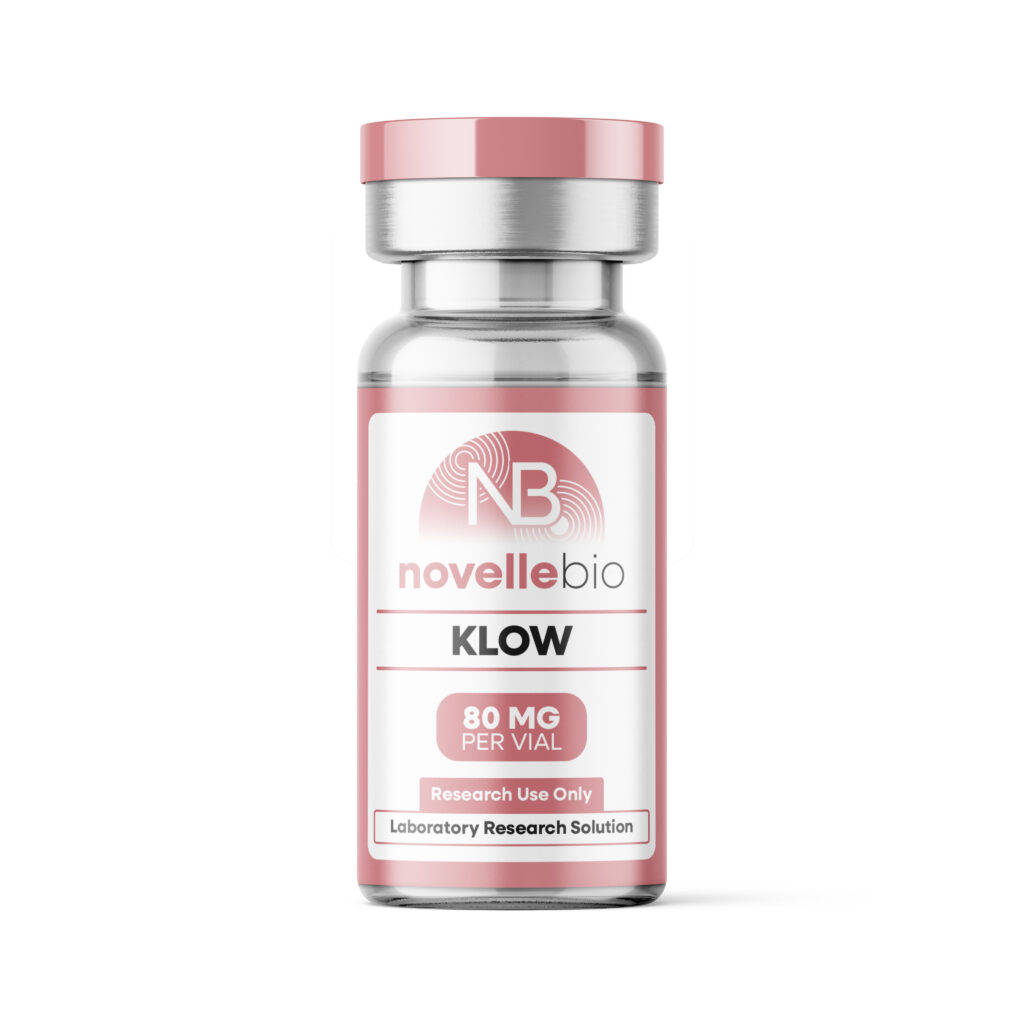
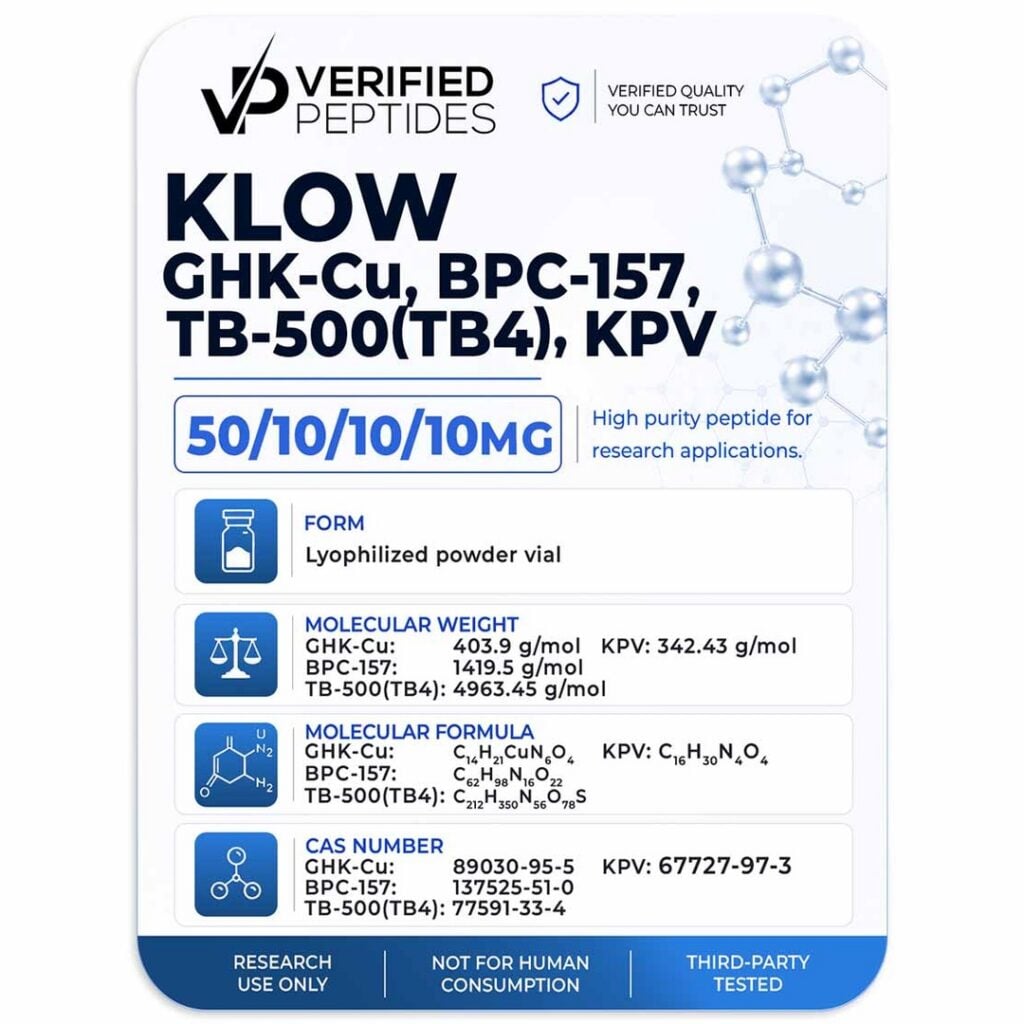
KLOW Blend is not a single peptide but a vendor-assembled combination research product. It is most commonly composed of four separately characterized peptides: GHK-Cu (copper tripeptide-1), KPV, BPC-157, and TB-500. The name is an acronym built from the first letters of its typical constituents. It follows the same logic as the earlier “GLOW Blend” (GHK-Cu, BPC-157, and TB-500) that has previously been documented on this site. KPV has been added as a fourth component. As with any compounded multi-ingredient research product, the exact ratio and total peptide content of KLOW Blend are defined by the individual vendor rather than by any standard or pharmacopeial specification.
Commercial listings surveyed for this article commonly describe an 80 mg vial split roughly as GHK-Cu 50 mg, BPC-157 10 mg, TB-500 10 mg, and KPV 10 mg. Other vendors use different ratios, and none of these formulations has been validated in a published study. No combined-formulation studies, whether cell-based, animal, or human, of the four-peptide KLOW mixture were identified in this search. Everything discussed below concerns the individual constituent peptides studied in isolation.
Each constituent has its own, independent research history. GHK-Cu is a naturally occurring copper-binding tripeptide (Gly-His-Lys) first isolated from human plasma by Loren Pickart in 1973. It was later found to decline in concentration with age and to have wound-healing and tissue-remodeling activity when complexed with copper(II). KPV is the C-terminal tripeptide (Lys-Pro-Val) of alpha-melanocyte-stimulating hormone (alpha-MSH). It has been studied for anti-inflammatory activity that appears independent of the classical melanocortin receptors and pigmentation effects of the parent hormone. BPC-157 (“body protection compound 157”) is a synthetic 15-amino-acid peptide corresponding to a partial sequence identified in and isolated from human gastric juice.
It has been studied extensively in rodent models of tissue injury and repair. TB-500 is marketed as a synthetic version of, or fragment derived from, thymosin beta-4 (Tβ4). Tβ4 is a small actin-binding protein first isolated from calf thymus and later shown to be widely expressed and involved in cell migration and tissue repair. Commercial “TB-500” products are not necessarily identical in sequence or purity to the thymosin beta-4 material used in published pharmaceutical trials. Researchers should keep this distinction in mind when comparing vendor material to the cited literature.
GHK has high affinity for Cu2+ and is proposed to act largely as this copper complex. In fibroblast culture, GHK-Cu stimulates collagen and glycosaminoglycan synthesis and modulates expression of matrix metalloproteinases and their inhibitors. These effects are attributed to copper-dependent activation of lysyl oxidase and broader gene-expression changes affecting extracellular matrix remodeling, angiogenesis, and antioxidant/anti-inflammatory pathways (Pickart & Margolina, Int J Mol Sci, 2018).
KPV is actively transported into intestinal epithelial and immune cells via the peptide transporter PepT1 (SLC15A1), which is upregulated at sites of inflammation. Once intracellular, KPV has been reported to inhibit NF-kB and MAPK signalling pathways, reducing downstream production of pro-inflammatory cytokines. This effect has been demonstrated independent of the classical melanocortin receptors that mediate alpha-MSH’s pigmentary and metabolic actions (Dalmasso et al., Gastroenterology, 2008).
BPC-157 has been reported to upregulate growth hormone receptor expression in tendon fibroblasts and to promote fibroblast/tendon-cell migration and survival under oxidative stress. It has also been shown to exert modulatory effects on angiogenesis and the nitric oxide system in rodent tissue-injury models (Cerovecki et al., J Orthop Res, 2010; tendon fibroblast studies, J Appl Physiol, 2010/2011).
Thymosin beta-4 is the major intracellular G-actin-sequestering protein in many cell types, buffering the pool of monomeric actin available for filament assembly. By releasing actin monomers in a regulated way, Tβ4 is proposed to promote cell migration, angiogenesis, and re-epithelialization in injured tissue (Goldstein, Hannappel, Kleinman, Trends Mol Med, 2005).
No published mechanistic study has examined whether combining these four peptides produces additive, synergistic, or antagonistic interactions. The mechanisms above are extrapolated entirely from single-peptide research.
GHK-Cu stimulates collagen synthesis in cultured human fibroblasts (Maquart et al., FEBS Lett, 1988) and modulates matrix metalloproteinase expression in wound-derived cell models. BPC-157 increases tendon fibroblast migration and survival under hydrogen-peroxide-induced oxidative stress in vitro (J Appl Physiol, 2010/2011). KPV is taken up by PepT1-expressing intestinal epithelial cells and reduces inflammatory signalling in cultured colonic epithelial and immune cell models (Dalmasso et al., 2008). Thymosin beta-4/TB-500 binds G-actin and has been shown in cell culture to promote keratinocyte and endothelial cell migration. No cell study of the four-peptide combination exists.
GHK-Cu increased collagen content in rat wound chambers relative to controls in classic wound-healing studies (Maquart et al., wound chamber work, 1993). BPC-157 has been studied extensively in rodent models of tendon, ligament, muscle, and gastrointestinal injury. Reported effects include acceleration of Achilles tendon and ligament healing in rats (Cerovecki et al., 2010) and promotion of muscle-to-bone reattachment and myotendinous junction repair in more recent rodent work. KPV reduced disease severity, myeloperoxidase activity, and epithelial barrier disruption in DSS- and TNBS-induced colitis mouse models (Dalmasso et al., 2008). Topical or systemic thymosin beta-4 increased re-epithelialization, reported at roughly 42% by day 4 and up to 61% by day 7 relative to saline controls. It also increased collagen deposition and angiogenesis in standardized animal dermal wound models. No animal study of the combined four-peptide KLOW formulation was identified.
Evidence quality diverges sharply between the four constituents at the human level. GHK-Cu has the most substantial human data. A randomized, placebo-controlled multicentre trial (Mulder et al., Wound Repair Regen, 1994) reported significantly faster healing of diabetic ulcers with topical glycyl-L-histidyl-L-lysine copper treatment. Separate controlled studies have also evaluated topical copper-tripeptide formulations in cosmetic and laser-resurfacing skin contexts. Thymosin beta-4, the parent molecule of TB-500 and not necessarily identical to commercial TB-500 material, was tested by RegeneRx Biopharmaceuticals in randomized, double-blind, placebo-controlled Phase 2 trials for venous stasis and pressure ulcers.
These trials reported accelerated healing in patients who achieved closure. A related Tβ4 ophthalmic formulation (RGN-259) has also shown positive Phase 2/3 results for dry eye disease. For BPC-157, review articles reference early-phase human studies, including in inflammatory bowel disease, conducted primarily in Croatia in connection with the compound’s original patent holders. However, these are not verifiable in standard international clinical trial registries such as ClinicalTrials.gov. No BPC-157 human trial meeting standard peer-reviewed reporting norms was identified in this search. No human trial of KPV, whether topical, oral, or injected, was identified. No human study of any kind has evaluated the combined KLOW formulation.
None of the four constituent peptides is approved by the FDA, EMA, or any comparable regulatory body for human or veterinary therapeutic use. No safety or toxicology data exist for the combined four-peptide product. At the individual-peptide level, GHK-Cu delivers bioavailable copper. Chronic high-dose exposure raises a theoretical concern about copper accumulation that has not been formally studied for injectable or systemic use. BPC-157 and TB-500 are both studied in contexts involving angiogenesis and cell proliferation.
This raises an unresolved theoretical question about their use in or near active neoplastic processes, one that has not been addressed by dedicated safety studies. KPV’s safety profile beyond rodent colitis models is essentially uncharacterized. No data address potential interactions among the four peptides when administered together. Purity, endotoxin content, and stability will depend entirely on the individual manufacturer, none of which has published validation data for the combined product.
KLOW Blend illustrates a common pattern in the research-peptide market. It is a catchy, vendor-defined combination name assembled from individually studied peptides, sold without any dedicated evidence that the combination itself behaves as claimed. Of the four constituents, GHK-Cu has the deepest and most consistent evidence base, spanning cell, animal, and randomized human wound-healing data.
BPC-157 has an extensive rodent literature across musculoskeletal and gastrointestinal injury models but no verifiable, peer-reviewed human trial data. Thymosin beta-4, the parent molecule of TB-500, has legitimate Phase 2 human trial data from a specific pharmaceutical sponsor. However, commercial “TB-500” research material is not established as equivalent to that trial material. KPV has a mechanistically distinct and biologically interesting anti-inflammatory rationale supported by rodent colitis studies but very limited independent follow-up and no human data.
No study, at any level, has evaluated GHK-Cu, KPV, BPC-157, and TB-500 in combination. The composition of “KLOW Blend” itself is not standardized across vendors. It is not approved for any human or animal therapeutic indication and is supplied strictly for laboratory research use.
1. Pickart L, Margolina A. Regenerative and Protective Actions of the GHK-Cu Peptide in the Light of the New Gene Data. Int J Mol Sci. 2018;19(7):1987. doi: 10.3390/ijms19071987.
2. Maquart FX, Pickart L, Laurent M, Gillery P, Monboisse JC, Borel JP. Stimulation of collagen synthesis in fibroblast cultures by the tripeptide-copper complex glycyl-L-histidyl-L-lysine-Cu2+. FEBS Lett. 1988;238(2):343-346.
3. Mulder GD, Patt LM, Sanders L, et al. Enhanced healing of ulcers in patients with diabetes by topical treatment with glycyl-L-histidyl-L-lysine copper. Wound Repair Regen. 1994;2(4):259-269.
4. Dalmasso G, Charrier-Hisamuddin L, Nguyen HTT, Yan Y, Sitaraman S, Merlin D. PepT1-mediated tripeptide KPV uptake reduces intestinal inflammation. Gastroenterology. 2008;134(1):166-178.
5. Dalmasso G, Nguyen HTT, Charrier-Hisamuddin L, et al. Critical role of PepT1 in promoting colitis-associated cancer and therapeutic benefits of the anti-inflammatory PepT1-mediated tripeptide KPV in a murine model. Cell Mol Gastroenterol Hepatol. 2016;2(3):336-354.
6. Cerovecki T, Bojanic I, Brcic L, et al. Pentadecapeptide BPC 157 (PL 14736) improves ligament healing in the rat. J Orthop Res. 2010;28(9):1155-1161.
7. Chang CH, Tsai WC, Lin MS, Hsu YH, Pang JHS. The promoting effect of pentadecapeptide BPC 157 on tendon healing involves tendon outgrowth, cell survival, and cell migration. J Appl Physiol. 2011;110(3):774-780.
8. Sikiric P, Seiwerth S, Rucman R, et al. Brain-gut axis and pentadecapeptide BPC 157: theoretical and practical implications. Curr Neuropharmacol. 2016;14(8):857-865. doi: 10.2174/1570159X13666160502153022.
9. Vasireddi N, Hahamyan H, Salata MJ, Karns M, Calcei JG, Voos JE, Apostolakos JM. Emerging use of BPC-157 in orthopaedic sports medicine: a systematic review. Am J Sports Med. 2025. PMID: 40756949.
10. Goldstein AL, Hannappel E, Kleinman HK. Thymosin beta4: actin-sequestering protein moonlights to repair injured tissues. Trends Mol Med. 2005;11(9):421-429. PMID: 16099219.
11. Thymosin Beta-4 and TB-500 in Tissue Healing, Regeneration, and Musculoskeletal Repair: A Scoping Review. Appl Sci. 2026;16(12):6202.
12. Goldstein AL, Badamchian M. Thymosins: chemistry and biological properties in health and disease. Expert Opin Biol Ther. 2004;4(4):559-573.