Cart

Oops, your cart is still empty
Looks like you haven’t added anything yet. Start exploring our products and find what you need.
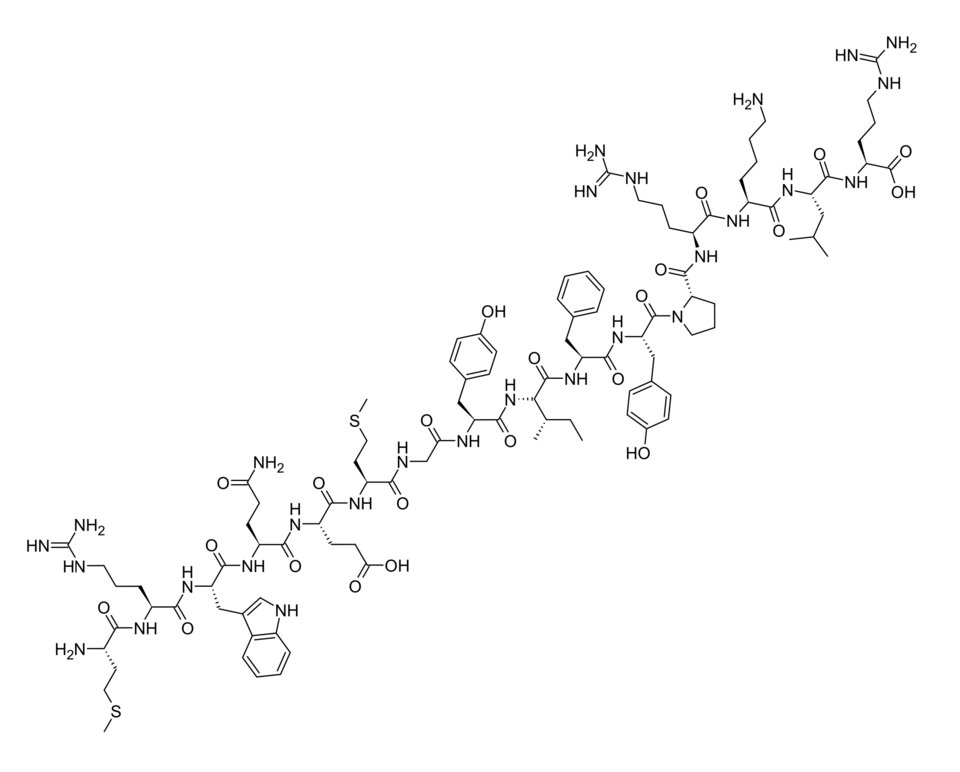
MOTS-c is a mitochondrial-derived peptide with a wide range of physiological functions. To date, the research on MOTS-c has been predominately pre-clinical, with the first human trial now underway. Research on MOTS-c has largely been in the areas of metabolism, inflammation, cardiovascular function, exercise, and general aging (among others).
This article explores the current research behind MOTS-c, including its cellular mechanisms, biological functions, and potentially beneficial properties using pre-clinical models.
Mitochondrial open reading frame [ORF] of the 12S rRNA Type-C (MOTS-c) is a 16-amino acid mitochondrial-derived peptide. As a whole, mitochondrial-derived peptides are produced by the short open reading frames encoded in the mitochondrial genome. Due to their specific location, mitochondrial-derived peptides may help to explain how mitochondria communicate within and between cells, in both healthy and disease states. [1]
MOTS-c is localized to the mitochondria of the cell at rest, where it essentially acts as a mitochondrial signal molecule or a mitochondrial coding regulator. Yet, MOTS-c can also be transferred to the nucleus during times of metabolic stress, where it can help direct nuclear gene expression and regulate nuclear transcription. In turn, these effects may support cellular homeostasis and overall cellular health. [1]
Researchers have looked into several notable effects of MOTS-c, primarily from cellular or animal models. In particular, MOTS-c has been researched in the following areas:
Each of these areas will be discussed further in the below sections.
Mitochondria are vital organelles for metabolism and energy production. Thus, as a mitochondrial- derived peptide, it is unsurprising that MOTS-c appears to play key roles in cellular metabolism and general metabolic function.
One of the most impactful studies on MOTS-c and metabolism used a combination of cellular and animal model methods. Firstly, in the in vitro portion of this study, researchers found that MOTS-c had notable regulation effects on the expression of genes associated with metabolism. MOTS-c significantly increased metabolites involved in acylcarnine and methionine metabolism, while significantly decreasing metabolites involved in purine and dipeptide metabolism. [2]
In this same study, researchers discovered that MOTS-c targets and inhibits the methionine-folate cycle, which leads to increased AICAR levels, and, consequently, activation of AMPK. This is important given that AMPK is a highly important enzyme that regulates cellular metabolism and energy homeostasis. Perhaps unsurprisingly, the researchers also found that MOTS-c increased glucose and fatty acid metabolism in cells. [2]
These same researchers also used an animal model to confirm these effects. In the in vivo portion of this study, they found that mice treated with MOTS-c had significantly increased insulin sensitivity and enhanced glucose metabolism and clearance, particularly in skeletal muscle. MOTS-c also helped to prevent weight gain and insulin resistance in mice fed a high-fat diet. [2]
The metabolic effects of MOTS-c have also been shown to be similar to those received from exercise, as evidenced by this in vivo study. Here, researchers examined the metabolic effects of exercise training and/or MOTS-c injection on diet-induced obese mice. They found that MOTS-c injection led to similar increases in protein expression of Glut4 and PGC-1a (which are important proteins involved in energy production and blood sugar regulation), and similar increases of phosphorylation levels of ACC and AMPK compared to exercise. MOTS-c injection also led to similar increases in plasma and skeletal muscle MOTS-c concentrations compared to the exercise intervention. [3]
An additional study looked into the effects of MOTS-c treatment on insulin sensitivity and overall metabolic health in mice fed a high-fat diet. They found that MOTS-c treated mice had significantly lower blood glucose levels compared to the placebo, suggesting improved insulin sensitivity. The MOTS-c treated mice also showed decreased levels of metabolites in sphingolipid, monoacylglycerol, and dicarboxylate metabolisms, which is important given that elevated metabolites in these pathways are associated with insulin resistance and metabolic syndrome. [4]
A few preclinical trials also provide evidence that MOTS-c plays certain roles in cardiovascular function.
In an in vivo study, researchers compared the effects of aerobic exercise versus MOTS-c injection in type 2 diabetes-induced mice, with particular attention to cardiac and metabolic function. Researchers found that mice treated with MOTS-c had less cardiac injury and improved cardiac function compared to diabetic mice without any intervention. They also found that MOTS-c intervention had similar effects to exercise on inflammation, myocardial apoptosis, angiogenesis, and endothelial cell function, which are all indicative of improved cardiac function. Moreover, MOTS-c led to improvements in blood glucose and insulin resistance. In part, the researchers attributed these effects to activation of the NRG1- ErbB4 pathway. [5]
In another in vivo study, researchers compared the cardiac function in mice during exercise with or without MOTS-c treatment. There were similar improvements in markers of heart structure and function in exercise only versus exercise plus MOTS-c treatment. However, adding MOTS-c alongside exercise led to more pronounced cardiac hypertrophy, improved myocardium mechanical efficiency, and improved systolic and diastolic function. [6]
MOTS-c may also have wider cardioprotective effects in mice, as evidenced by this study involving a mouse model of heart failure. Compared to the control solution, mice injected with MOTS-c showed significant attenuation of deteriorating cardiac structure and function. They also found that MOTS-c treatment significantly mitigated fibrosis and apoptosis, downregulated inflammation (e.g. IL-6, TNF-a), upregulated certain antioxidant genes (e.g. HO-1, NQO-1), and enhanced AMPK levels. [7]
MOTS-c has also been found in pre-clinical (animal) models to potentially help with inflammation, in part by activating AMPK (among other mechanisms).
In an in vivo study, researchers looked into the effects of MOTS-c in mice who underwent formalin- induced inflammatory nociception. They found that MOTS-c administration led to a reduction in pro- inflammatory cytokines, as well as an increase in anti-inflammatory cytokines, indicating overall anti- inflammatory effects in mice. In addition, MOTS-c had anti-nociceptive properties, as evidenced by a decrease in time that the mice spent licking their paws. The researchers also noted an increase in AMPK activation. This, combined with the fact that administering an AMPK antagonist mitigated the anti- nociceptive effects of MOTS-c, indicates AMPK as a major pathway for these effects in mice. [8]
In another in vivo study, researchers looked into the anti-inflammatory effects of MOTS-c after inducing pain and inflammation in mice via formalin, capsaicin, carageenan, and complete Freund’s adjuvant (CFA). They found that MOTS-c treatment led to dampened pain responses, as well as inhibition of inflammatory responses and inhibition of neuronal overexcitation. Together, these effects suggest an overall beneficial effect of MOTS-c in mice with inflammatory pain. [9]
Another in vivo study investigated the effects of MOTS-c on high fat diet and streptozotocin-induced type 2 diabetic rats. The researchers found that rats treated with MOTS-c experienced significant reductions in fasting blood glucose and C-reactive protein compared to the placebo. MOTS-c administration also modulated a variety of inflammatory cytokines (e.g. IL-10), and reduced NLRP3 and cleaved caspase-1 levels in the heart. Comprehensively, MOTS-c appeared to decrease both systemic and cardiac inflammation in type 2 diabetic rats. [10]
Aging is associated with a decline in physical performance, which is in part due to losses in muscle mass and strength, decreased bone density, and poorer mitochondrial function, among other factors. In pre-clinical research, MOTS-c has shown to provide potential benefits at the intersection of exercise and aging.
In one of the most notable studies in this area, researchers first discovered that levels of MOTS-c increased significantly (nearly 12-fold) in the skeletal muscle of young men after exercise, along with notable (but not as significant) increases in the plasma. [11]
In the next portion of this study, the researchers examined the effects of MOTS-c administration on exercise performance and aging in mice. They found that MOTS-c led to significant improvements in exercise performance in both young and old mice, including increased running capacity and power output. Furthermore, MOTS-c administration in late-life mice led to improved grip strength, stride length, and general physical performance, indicating a potentially beneficial effect of MOTS-c on age- related physical decline. [11]
In another in vivo study, researchers examined the potential ergogenic effects of MOTS-c in mice. They found that mice who were injected with MOTS-c experienced significant increases in total running time and running distance compared to the control group, indicating an overall improvement in exercise performance. [12]
MOTS-c is currently on the World Anti-Doping Agency (WADA) Prohibited List. It is prohibited at all times under Section 4.4 Metabolic Modulators, 4.4.1 AMPK Activators. Athletes can’t get a Therapeutic Use Exemption (TUE) because there is no approved therapeutic use for MOTS-c. [13]
As of June, 2026, there haven’t been any completed or published clinical trials on MOTS-c, but there is one clinical trial currently in progress (NCT07505745). This phase 2a study is investigating the effects of MOTS-c on insulin sensitivity in obese/overweight individuals with prediabetes. [14]
Otherwise, any human research related to MOTS-c has been through observational studies. These studies have primarily examined skeletal muscle and/or plasma levels of naturally occurring MOTS-c in various populations (e.g. overweight, aging, exercise, insulin resistance), rather than investigating the effects of actual MOTS-c administration on certain disease states or biological functions. [1] [15]
Overall, essentially all of the current published research on MOTS-c is from pre-clinical trials. In these studies, which have primarily utilized mouse or rat models, MOTS-c has exhibited positive effects on insulin sensitivity, fat and sugar metabolism, cardiac structure and function, inflammation and pain, exercise performance, and aging. These effects are thought to be mediated by a few mechanisms, including AMPK activation, as well as downregulation of inflammatory processes, among others. Significant research is certainly needed to confirm these effects in animals, let alone to even begin the discussion on whether or not these benefits are translational to humans.