Cart

Oops, your cart is still empty
Looks like you haven’t added anything yet. Start exploring our products and find what you need.

Semax is a multi-part synthetic peptide that is known for its pronounced nootropic, neuroprotective, and immunomodulatory effects.1 The first part of the molecule is a synthetic heptapeptide, which is the source for the name of this molecule.1 Semax is a Russian acronym for the term “seven amino acids,” which include methionine-glutamic acid-histidine-phenylalanine-proline-glycine and proline (MEHFPGP).1
The rest of this chemical is composed of an analog of a fragment of the adrenocorticotropic hormone (ACTH) that is involved with the biosynthesis of steroids.1,2 ACTH has additional biochemical activities and acts directly on the central nervous system to accelerate processes of learning.2 The ACTH derivative ACTH(4-7)PGP (Met-Glu-His-Phe-Pro-Gly-Pro) has strong neuroprotective activity.1,3,7
The difference with Semax rather than ACTH(6-9)-PGP is that Semax lacks its Arg-Trp dimer, which provides hormonal activity and can cause anxiety.2 Therefore, Semax retains its neuroprotective activity but does not act like a hormone.1
Semax is used to treat neurological pathologies and stress conditions in humans in Russia and is included in Russia’s list of “Vital and Essential Drugs for Medical Application.3 The official document is titled “Appendix No. 1 to Decree No. 2406-r of the Government of the Russian Federation, dated October 12, 2019.”3
The research discussed in this article was conducted in Russia unless specified otherwise.
Dutch research in the 1960s showed that removing the anterior pituitary gland in animals disrupted the development of conditioned reflexes.4 Myasoedov and Ashmarin at the Department of Human and Animal Physiology at the Institute of Molecular Genetics of the Russian Academy of Sciences Moscow followed up on this research in the 1970s.4,5 They wanted to develop a new nootropic drug and selected ACTH4-10 as their prototype.4 This molecule was chosen because it contained proline, which makes the molecule highly stable in the body.4 Peptides are usually vulnerable to cleavage by a variety of peptidases, but ACTH4-10 is an unusually stable peptide.4
ACTH4-10 has promising activities, but its duration of activity is as short as 30 to 60 min.2 Myasoedov and Ashmarin designed a number of peptides based on this fragment to try to identify one that was more stable.2 They found that adding Pro-Gly-Pro to the C terminus end of the peptide greatly enhanced and prolonged its activity.2 The peptide with the seven amino acids Met-Glu-His-Phe-Pro-Gly-Pro was found to be the most active and had effects for 20-24 h.2
Not only was Semax a highly successful invention; another heptapeptide called Selank that also has clinical applications was created.2 These peptides were used as the basis to develop new drugs that are used to treat various diseases of the nervous system.2 Unfortunately, most of the trials on these drugs were published in Russian-language journals and often scattered in different states.6 Therefore, much of the original clinical data on Semax cannot be independently verified.6
ACTH is part of a family of neuropeptides called melanocortins.1,2 This term is derived from the common polypeptide precursor proopiomelanocortin (POMC), which is processed to multiple classes of neuropeptides, including ACTH, MSH (melanocyte-stimulating hormones), and endorphins.1
There are multiple groups of MSHs.1 All natural MCs are composed of a common precursor protein and contain a sequence that corresponds to ACTH6-9 (His-Phe-Arg-Trp)4.
The search for new strategies to treat stroke has been an ongoing urgent problem.7 One approach to this problem is to study the mechanisms of action of drugs that have a neuroprotective effect against stroke (cerebral ischemia).7 Sudarkina and colleagues7 confirmed the protective role of Semax in a tMCAO (transient middle cerebral artery occlusion) rat model of cerebral ischemia-reperfusion (IR) at the levels of both transcription and translation.
tMCAO is the most widely used experimental model to conduct basic research on ischemic stroke.8 It mimics a cerebral ischemia followed by reperfusion, which is analogous to the scenario of stroke patients who have a clot removed or undergo recanalization. That made it notable when the 2023 paper Neuroprotective Peptides and New Strategies for Ischemic Stroke Drug Discoveries cited Semax as “successfully used for the treatment of IS.”1
The a-MSH portion of Semax appears to be responsible for its neuroprotective effects in models of ischemia.1 One property that it shares is the ability to potentiate the transmission of serotonin and dopamine in the striatum.9
Animal models have been critical in the study of potential treatments for Alzheimer’s disease (AD), the most common neurodegenerative disease that is increasing in significance as the populations grow older. 3
Recent research by Radchenko et al.3 studied the use of Semax in improving cognitive function in a mouse model of AD. They altered two amino acids in Semax to forms that had been shown to play a positive role in improving the functional state of neurons.3 The researchers changed His-Phe to Asp-Arg, which resulted in the tripeptide sequence of Glu-Asp-Arg.3 Features relevant to AD were then studied, including changes in the behavior of mice and the amount of amyloid in brain tissues.3
Both Semax and its derivative improved cognitive function in the mice.3 This was shown by the ability of the mice to recognize novel objects, travel through a maze, and respond to an open field test.3 The study also examined the brain tissue of the mice using histology to monitor the number of amyloid plaques that are typical of AD.3 They noted a reduction in the number of amyloid inclusions in the hippocampus and cortex of their brains.3 There was a notable decrease in the larger plaques in particular. 3
Dergunova et al1 note that Semax has been used in neurological practice for many years to treat acute and chronic disorders and delineate its pronounced neuroprotective and nootropic effects.
High-dose studies on humans with Semax (250 – 1,000 µg/kg) caused electroencephalographic changes that were similar to those after administration of typical neuroprotective drugs.2 Semax is now used to treat stroke in Russia.5
Cell cultures of embryonic rat brain cells were used to identify pronounced neuroprotective properties from Semax.10 Treatment with this molecule increased the number of surviving neurons up to 3-fold compared with a control and stimulated the activity of acetylcholinesterase in another study.10
Several studies on the treatment of acute hypobaric hypoxia in rats of different ages with Semax yielded positive results.2 A single pretreatment with Semax (50 µg/kg) increased the individual resistance of rats to hypoxia and reduced the changes in behavior caused by oxygen deficiency.2 Multiple studies have shown that treatment with 100 µg/kg of Semax reduced the effects of hypoxic conditions on rats.2
A double intraperitoneal injection of 300 µg/kg of Semax induced a neuroprotective effect on the brains of rats with ischemia, and treatment with 250 µg/kg of Semax provided neuroprotective and antiamnestic effects in prefrontal cortical areas.2
The most prominent neurotrophic factors are nerve growth factor (NGF) and brain-derived neurotrophic growth factor (BDNF).4 BDNF is considered to be “the master regulator of neuroplasticity than declines with age,”6 and Semax has been shown to increase its expression in cultures of glial and nerve cells.4 In vivo research showed that intranasal administration in rats increased the expression of BDNF mRNA and the levels of its protein in the basal ganglia of the forebrain and hippocampus.4 These effects are considered to be why Semax is such an effective neurotrophic molecule.4
Additional research identified that Semax also increases the phosphorylation of trkB (tropomyosin receptor kinase B also known as tyrosine receptor kinase 2) that regulates the quantities of BDNF.6
Semax has nootropic effects in humans and animals and has been shown to stimulate learning, attention, and the formation of memories.3 Not only does Semax stimulate memory processes in intact animals; it also does so in pathological conditions.4 These effects are so pronounced that Semax is studied as a potential therapeutic agent for Alzheimer’s disease.3
In one study, rats treated with Semax were quicker at acquiring food in a T-maze.2 Another study showed that treatment with Semax improved learning in animals by reducing the conditioned passive avoidance reflex after electroshock treatment.2 Dolotov et al.10 postulated that the increased cognitive effects of Semax in rats could be due to its increase in the levels of BDNF in the basal forebrain.
Semax appears to have a similar effect on human volunteers. Intranasal administration of 16 µg/kg significantly increased the short-term memory and attention of the subjects during testing.2 Voronina11 states that Semax stimulates learning processes and reduces amnesia.
Animal studies using transcriptomics examine the expression of individual genes and can help to identify signaling pathways.1 This approach has made significant contributions to understanding the molecular mechanisms of brain damage and IR.1 It has also revealed the mechanisms of action of many potential drugs at the genetic level, including Semax and the PGP tripeptide at the C end of Semax.1 Changes in the expression of genes following treatment with this peptide mimicked those after treatment with Semax.1
Shadrina et al.12 studied the effect of intranasal Semax application on the temporary dynamics of the expression of BDNF and NGF in the rat hippocampus, frontal cortex, and retina. There were strong differential responses in the tissues.12 Both genes were less expressed in the hippocampus and retina but increased in the frontal cortex 20 min after administration.12 The level of expression of NGF stayed nearly constant in the retina, while those of BDNF increased significantly 90 min after the Semax was administered.12
Tissue culture and animal models clearly demonstrated the ability of Semax 1% to inhibit multiple types of oxidative reactions, including the biosynthesis of nitric oxide, and reduce the level of glutamate excitotoxicity and oxidative stress.11 Semax also protected against the oxidative toxicity caused by potassium cyanide, tert-butyl hydroperoxide, and hydrogen peroxide.1
An Italian study by Tomasello et al.13 studied the effect of Semax on AD using the common model system of the human neuroblastoma cell line SH-SY5Y. They utilized its high affinity for the copper ion Cu(II), which can complex with peptides that have been strongly implicated in the pathogenesis of AD. 13 These peptides are referred to as amyloid-beta (ab) peptides, and their copper complex is known as Cu(II)-ab.13 This complex can catalyze the production of a group of neurotoxic compounds known as reactive oxygen species (ROS).13
This study showed that Semax can extract the copper from Cu(II)-ab and protect human cells from the oxidative stress induced the oxidation of the ab peptide catalyzed by copper.13 The authors note that these findings could provide valuable insights into using Semax to design new compounds to treat AD.13
Dergunova et al14 provided evidence that one of the reasons for the utility of Semax in treating strokes is its anti-inflammatory effects after tMCAO. In a 2023 study,1 they reported that Semax suppressed the expression of numerous genes associated with inflammatory processes in concert with genes associated with neurotransmission. These findings are relevant to IR because they compensated for changes in the expression of genes under IR conditions.1
In a 2023 review on neuroprotective peptides in Russia, Dergunova et al.1 noted the immunomodulatory effects of Semax. In particular, the PGP tripeptide at the C end of Semax is involved in the formation of the immune response.1
Semax has been used clinically to reduce anxiety.6
Neuropeptides are notoriously unstable, prone to degrade rapidly, and often have trouble passing through the blood-brain barrier (BBB).4 Semax is notable for not having these properties.4 The time it takes for Semax to penetrate the BBB can vary depending on the type of application.4 Approximately 0.01% of Semax penetrates the BBB after administration by IV.2 In contrast, 0.093% of Semax penetrates this barrier 2 min after an intranasal injection.2
Rats brain cells and rats themselves have been model systems for studies using the growth factors BDNF and NGF that play a role in the survival of brain cells.10 A collaborative study between the Institute of Molecular genetics at the Russian Academy of Sciences, M. V. Lomonosov Moscow State University and the University of Leipzig (Germany) showed that Semax stimulates the biosynthesis of BDNF in astrocytes cultured from the basal forebrains of rats.10
The probable safety of Semax and its low toxicity is an important pharmacodynamic property of this compound.5 Semax has been reported to have a favorable safety profile in Russian studies,5
and Semax had passed the required safety tests in Russia by 1990.4 The use of Semax 1% as a nasal treatment on humans revealed only minimal side effects.2 The mucous membrane of the nasal cavity became discolored in 10% of the patients, and there was a small increase in the blood sugar of 7.4% of the patients who had diabetes.2
The ACTH fragments and their analogues were typically tested on humans by injecting them.4
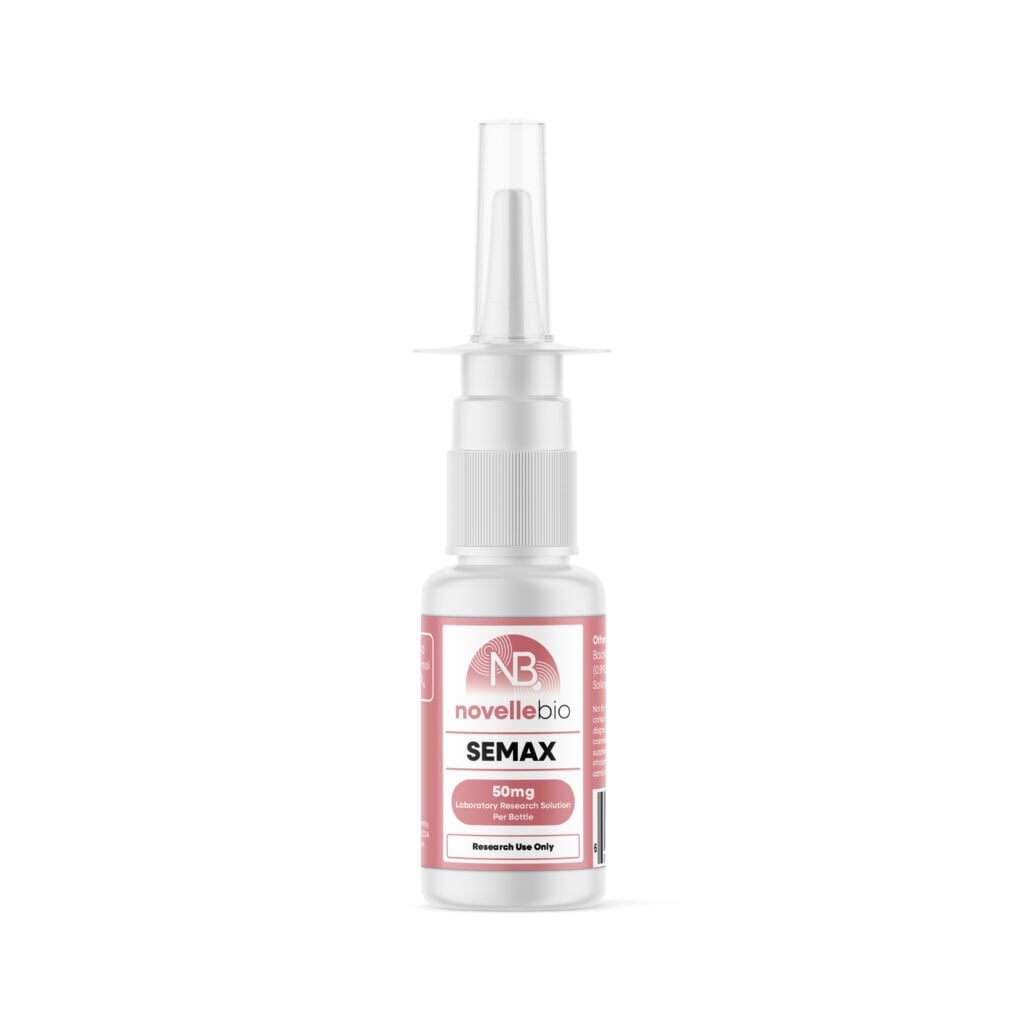
While this was easier for researchers, it was not ideal for clinical practice.4 Therefore, the researchers tested intranasal administration as an alternative.4 Not only was this an effective way to treat humans with Semax; the chemical had nootropic activity at lower doses when administered in this manner.4
Nasal drop preparations of Semax were tested on human subjects in Russia and passed all the preclinical and clinical trials.2 The initial preparations used 0.1% Semax, but 1% nasal drops were introduced by 2001 to treat patients who had suffered ischemic strokes.2 An additional preparation called Minisem was developed for children 3 years and older who suffered from neurological defects.2
Semax was used to treat elderly stroke patients in clinical trials, and its addition to standard care improved the neurological recovery, resulted in better cognitive function, and enhanced the outcomes of rehabilitation.6 The standard treatment was two courses of Semax a day (6,000 µg/day) for 10 days with a 20-day interval.6
Even though the half-life of Semax in blood serum is > 1 h, its intermediates can be remarkably stable.2 Some of these intermediates such as Glu-His-Phe-Pro-Gly-Pro can have neurotrophic activity in the same range as the original molecule.2
Semax was shown to stimulate attention and memory in healthy people, as well as those who had to function in extreme conditions for long durations.4 Further study identified its neuroprotective and antihypoxic activity in the treatment of stroke and neurodegenerative diseases.4
These results were positive enough that the Pharmacological Committee of the Ministry of Health of the Russian Federation recommended permitting the medical use of Semax in 1993 and initiated industrial production of this molecule.4
The development and implementation of Semax in Russia was considered so significant that key personnel involved in its development, including IP Ashmarin and NF Myasoedov, were awarded the Russian Government Prize in 2002.4
The current research strategies for Semax in Russia described in 2025 include its effects on a model of neonatal stress in white rats, perinatal exposure to SSRIs, and perinatal hypoxia in animals of different ages.4 Additional research is being conducted on the ability of Semax to compensate for the effects of acute and chronic stress and its neuroprotective action in models of ischemic stroke.4
However, as of 2026, there has been no independent Western validation of these findings.6
Therapeutic peptides in gerontology: mechanisms and applications for healthy aging (2026)
IP Ashmarin and the Study of Neurotropic Activity of Regulatory Peptides (2025)
Neuroprotective peptides and new strategies for ischemic stroke drug discoveries (2023)
Cognitive impairment and nootropic drugs: mechanism of action and spectrum of effects (2023)
A new generation of drugs: synthetic peptides based on natural regulatory peptides (2013)
1. Dergunova LV, Filippenkov IB, Limborska SA, Myasoedov NF. Neuroprotective peptides and new strategies for ischemic stroke drug discoveries. Genes. 2023 14(5):953. https://doi.org/10.3390/genes14050953
2. Kolomin T, Shadrina M, Slominsky P, Limborska S, Myasoedov N. A new generation of drugs: synthetic peptides based on natural regulatory peptides. Neuroscience and Medicine. 2013 4(4):223
3. Radchenko AI, Kuzubova EV, Apostol AA, Mitkevich VA, Andreeva LA, Limborska SA, Stepenko YV, Shmigerova VS, Solin AV, Korokin MV, Pokrovskii MV. The potential of the peptide drug Semax and Its derivative for correcting pathological impairments in the animal model of Alzheimer’s disease. Acta Naturae. 2025 17(4):110.
4. Levitskaya NG, Sarycheva NY, Voskresenskaya OG, Dubynin VA. IP Ashmarin and the Study of Neurotropic Activity of Regulatory Peptides. Neurochemical Journal. 2025 19(4):525-36. DOI: 10.1134/S1819712425700588
5. Deigin V I, Poluektova E A, Beniashvill AG, Kozin SA, Poluektov YM. Development of Peptide Biopharmaceuticals in Russia. Pharmaceutics. 14(4):716. https://doi.org/10.3390/pharmaceutics14040716
6. Mavrych V, Shypilova I, Bolgova O. Therapeutic peptides in gerontology: mechanisms and applications for healthy aging. Frontiers in Aging. 2026 7:1790247.
7. Sudarkina OY, Filippenkov IB, Stavchansky VV, Denisova AE, Yuzhakov VV, Sevan’kaeva LE, Valieva LV, Remizova JA, Dmitrieva VG, Gubsky LV, Myasoedov NF. Brain protein expression profile confirms the protective effect of the ACTH (4–7) PGP peptide (Semax) in a rat model of cerebral ischemia–reperfusion. International Journal of Molecular Sciences. 2021 22(12):6179.
8. Liu F, McCullough LD. The middle cerebral artery occlusion model of transient focal cerebral ischemia. In Cerebral Angiogenesis: Methods and Protocols 2014 Jan 1 (pp. 81-93). New York, NY: Springer New York.
9. Eremin, K.O.; Kudrin, V.S.; Saransaari, P.; Oja, S.S.; Grivennikov, I.A.; Myasoedov, N.F.; Rayevsky, K.S. Semax, an ACTH(4-10) analogue with nootropic properties, activates dopaminergic and serotoninergic brain systems in rodents. Neurochemical Research 2005, 30, 1493–1500
10. Dolotov OV, Karpenko EA, Seredenina TS, Inozemtseva LS, Levitskaya NG, Zolotarev YA, Kamensky AA, Grivennikov IA, Engele J, Myasoedov NF. Semax, an analogue of adrenocorticotropin (4–10), binds specifically and increases levels of brain‐derived neurotrophic factor protein in rat basal forebrain. Journal of Neurochemistry. 2006 97:82-6.
11. Voronina TA. Cognitive impairment and nootropic drugs: mechanism of action and spectrum of effects. Neurochemical Journal. 2023 17(2):180-8.
12. Shadrina M, Kolomin T, Agapova T, Agniullin Y, Shram S, Slominsky P, Lymborska S, Myasoedov N. Comparison of the temporary dynamics of NGF and BDNF gene expression in rat hippocampus, frontal cortex, and retina under Semax action. Journal of Molecular Neuroscience. 2010 41(1):30-5.
13. Tomasello MF, Di Rosa MC, Naletova I, Sciacca MF, Giuffrida A, Maccarrone G, Attanasio F. Semax, a Copper Chelator Peptide, Decreases the Cu (II)‐Catalyzed ROS Production and Cytotoxicity of aβ by Metal Ion Stripping and Redox Silencing. Bioinorganic Chemistry and Applications. 2025(1):4226220.
14. Dergunova LV, Dmitrieva VG, Filippenkov IB, Stavchansky VV, Denisova AE, Yuzhakov VV, Sevan’kaeva LE, Valieva LV, Sudarkina OY, Gubsky LV, Myasoedov NF. The Peptide Drug ACTH (4–7) PGP (Semax) Suppresses mRNA Transcripts Encoding Proinflammatory Mediators Induced by Reversible Ischemia of the Rat Brain. Molecular Biology. 2021 55(3):346-53.