Cart

Oops, your cart is still empty
Looks like you haven’t added anything yet. Start exploring our products and find what you need.
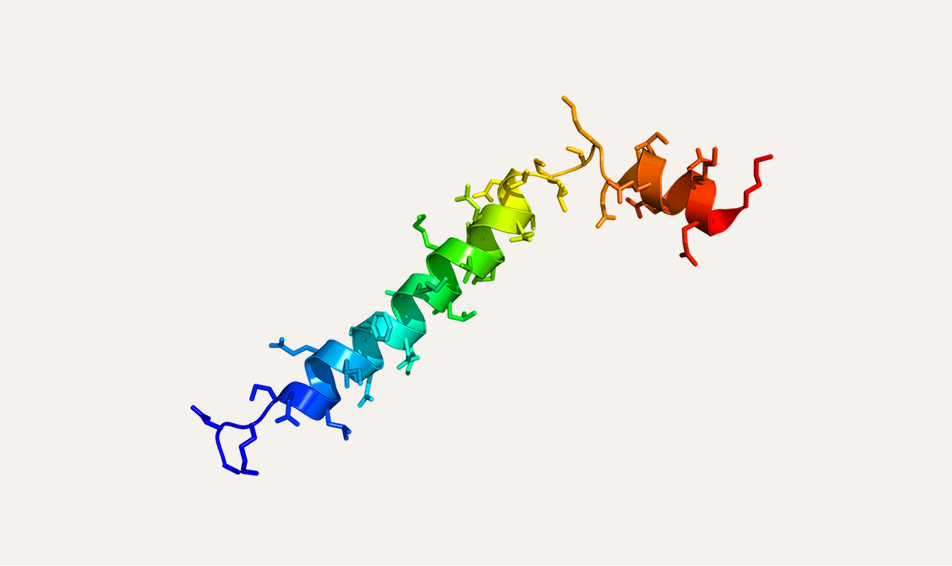
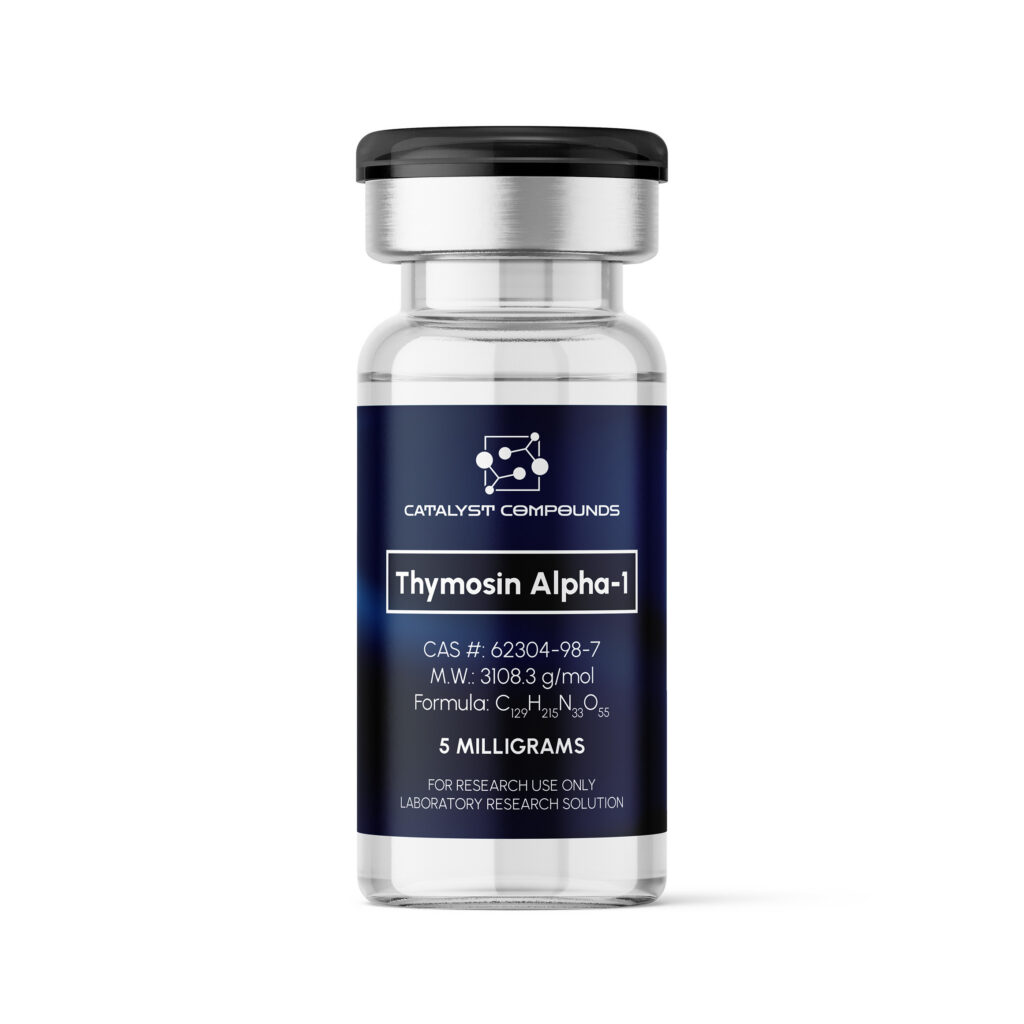
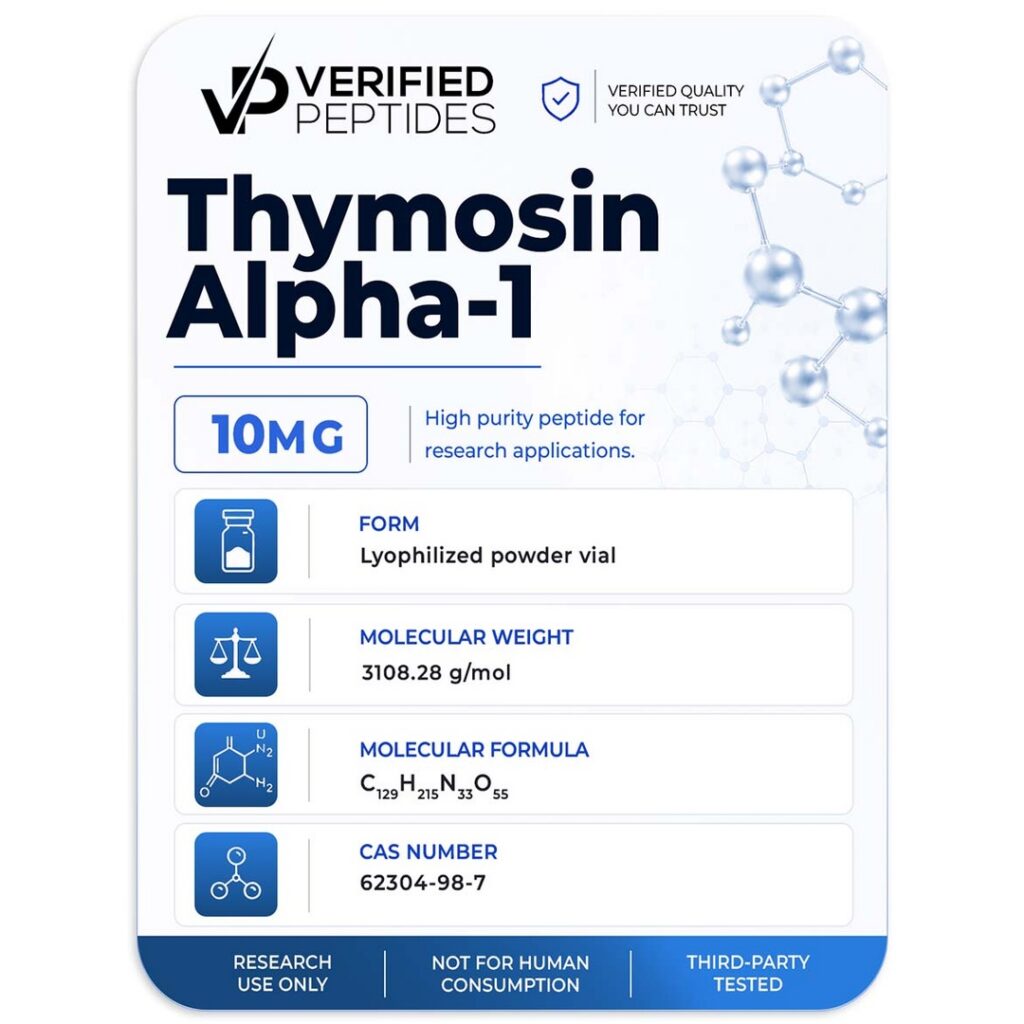
Thymosin alpha-1 (Tα1; generic name thymalfasin) is a 28-amino-acid, N-terminally acetylated, highly acidic peptide with the sequence Ac-Ser-Asp-Ala-Ala-Val-Asp-Thr-Ser-Ser-Glu-Ile-Thr-Thr-Lys-Asp-Leu-Lys-Glu-Lys-Lys-Glu-Val-Val-Glu-Glu-Ala-Glu-Asn and a molecular weight of approximately 3,108 Da. It was first characterized in 1972 by Allan L. Goldstein and colleagues at the University of Texas Medical Branch.
They were working to isolate and identify the biologically active components of “thymosin fraction 5,” a partially purified extract of bovine thymus tissue. Tα1 is generated in vivo by proteolytic cleavage (via asparagine endopeptidase) of the larger precursor protein prothymosin alpha. It is naturally produced across numerous mammalian tissues, including the thymus, spleen, lung, kidney, brain, and circulating blood, with the highest concentrations found in the thymus gland itself.
Thymosin alpha-1 belongs to the broader family of thymic peptides implicated in T-lymphocyte maturation and immune competence. Researchers became interested in the molecule because it appeared to modulate both innate and adaptive immunity, without acting as a conventional cytokine or hormone. Instead, it functions as an intracellular and cell-surface immune signal that recalibrates dendritic cell and T-cell activity. Unlike most compounds covered on this site, Tα1 is not purely investigational.
Under the brand name Zadaxin (SciClone Pharmaceuticals), it is an approved prescription drug in more than 30 countries, including China, Italy, and the Philippines. It is approved for chronic hepatitis B, chronic hepatitis C (as an adjunct to interferon), and as an immune adjunct in certain cancer and vaccine-response settings. It has never been approved by the US FDA. On peptides.com it is offered strictly as a research-use-only chemical for laboratory investigation, not for human or animal administration.
A major proposed mechanism involves Tα1 binding to and activating TLR9 on plasmacytoid dendritic cells. This triggers MyD88- and IRF7-dependent downstream signalling that upregulates indoleamine 2,3-dioxygenase (IDO). In some contexts, this promotes a regulatory, tolerogenic dendritic cell phenotype, while in others it simultaneously enhances antigen presentation and Th1-skewed adaptive responses. This dual, context-dependent action on dendritic cells is thought to underlie Tα1’s ability to both dampen excessive inflammation (e.g., in sepsis) and enhance antiviral or antitumour immunity (Romani L, et al. Ann N Y Acad Sci. 2007; Garaci E. Ann N Y Acad Sci. 2007).
Tα1 was originally identified for its capacity to promote maturation of T-cell precursors. It also restores a healthier balance of T-helper 1 (Th1) and T-helper 2 (Th2) cytokine responses, alongside effects on regulatory T-cell populations. This immune-recalibrating action is proposed to explain its use as an adjunct in chronic viral infection. In this setting, a skewed or exhausted T-cell response contributes to failure of viral clearance.
In vitro work using tumour cell lines and isolated immune cell subsets indicates Tα1 has direct immunomodulatory activity beyond its dendritic cell effects. This includes effects on natural killer cell activity and cytokine profiles of distinct immune subsets. These findings have motivated its investigation as an adjunct to chemotherapy, radiotherapy, and checkpoint inhibition in oncology (PMC12433645).
In vitro studies have characterized Tα1’s direct immunomodulatory activity on tumour cell lines and isolated human immune cell subsets. These studies report effects on cytokine secretion and immune cell phenotype that support its proposed role as an immune-response modifier in the tumour microenvironment (PMC12433645, Oncol Targets Ther).
Preclinical work, much of it from Garaci and colleagues, has characterized Tα1’s activation of dendritic cells for antifungal Th1 resistance via Toll-like receptor engagement in murine models. It has also shown Tα1’s capacity to restore immune competence in models of immunosuppression. Animal data of this kind underpin the mechanistic rationale later tested in human trials. This compound’s evidence base is unusual among research peptides, however, in that human clinical data now substantially outweigh animal data in volume (Romani L, et al. Ann N Y Acad Sci. 2007).
Thymosin alpha-1 has one of the more extensive human clinical trial records of any peptide discussed on this site, reflecting its status as an approved drug (Zadaxin) in numerous countries. The studies below are drug-development trials, not cosmetic or wellness studies.
A meta-analysis of five randomized trials (n=353) in chronic hepatitis B evaluated Tα1 (with or without interferon) versus control. Treatment effect on virological response was delayed. Odds ratios were 0.56 at end of treatment, 1.67 at 6 months post-treatment, and 2.67 (95% CI 1.25-5.68) at 12 months post-treatment. This suggests a treatment effect that manifests well after dosing ends (Cooksley WGE. J Viral Hepat. 2003 area of literature; meta-analysis referenced via PubMed 11736720).
In sepsis, the ETASS multicentre, single-blind, randomized controlled trial in China evaluated Tα1 as an adjunct to standard care in patients with severe sepsis. Subsequent systematic reviews and meta-analyses have pooled this and other trials. A meta-analysis of 11 randomized controlled trials (n=1,927) found a significant reduction in 28-day mortality with Tα1 (OR 0.73, 95% CI 0.59-0.90). This benefit was attenuated and not statistically significant in analyses restricted to higher-quality, multicentre trials. Trial sequential analysis indicated the cumulative sample size remains insufficient for a definitive conclusion (systematic review and meta-analysis, Front Cell Infect Microbiol. 2025).
In oncology, Tα1 has been studied as an adjunct to chemotherapy, chemoradiotherapy, and post-surgical adjuvant therapy in non-small cell lung cancer (NSCLC) and other malignancies. Retrospective and randomized data suggest Tα1 combined with chemotherapy increases objective response rate and one-year overall survival, compared with chemotherapy alone. It has also been reported to reduce chemotherapy-associated thrombocytopenia, neutropenia, and gastrointestinal toxicity in some analyses.
A multicentre European Phase 2 trial in 571 patients with stage IV melanoma found Tα1 improved duration of therapeutic response and clinical benefit. This held true when combined with chemotherapy or biochemotherapy, without added toxicity. In locally advanced, unresectable NSCLC treated with concurrent chemoradiotherapy, Tα1 has been reported to reduce chemoradiation-induced lymphopenia and pneumonia incidence, with a trend toward improved overall survival (Zhang Y, et al. Transl Lung Cancer Res; NCT03659578, NCT06139419).
Thymosin alpha-1’s safety profile is unusually well documented for a research peptide because of its decades of use as an approved drug. Manufacturer and regulatory filings describe clinical experience across more than 2,000 to over 11,000 individual patients, spanning multiple age groups and indications. No clinically significant adverse reactions were definitively attributable to Tα1 in the majority of published safety reviews.
The most frequently reported adverse effects are mild and local: injection-site discomfort, transient erythema, and rare reports of transient muscle atrophy, polyarthralgia with hand oedema, or rash. No major signal for organ toxicity, teratogenicity, or carcinogenicity has been reported in the published clinical literature. However, formal long-term carcinogenicity and reproductive toxicology studies specific to Tα1 are not well represented in the public record.
Despite this favourable track record abroad, Tα1/Zadaxin has never received FDA approval in the United States. Industry commentary attributes this regulatory gap to commercial and market-size factors, rather than an identified safety concern. As with all compounds on this site, no dosing guidance for human or animal use is provided here. Foreign drug-approval status does not constitute FDA approval or endorsement for use in the United States. Product sold on peptides.com is strictly for laboratory research use.
Thymosin alpha-1 is among the most clinically studied peptides in this catalogue. Its evidence base is built on decades of use as an approved immunomodulatory drug (Zadaxin) in more than 30 countries for chronic hepatitis B and C. It also has growing off-label and trial use as an adjunct in sepsis and oncology. Mechanistic work implicates TLR9-dependent dendritic cell modulation and Th1/Th2 rebalancing as central to its action.
Human trial data for hepatitis B show a delayed but measurable virological benefit. Sepsis data are encouraging but inconsistent across trial quality strata, with meta-analyses explicitly flagging insufficient statistical power for a firm conclusion. Oncology data, while promising across several tumour types, are drawn largely from Asian and European trials using varied endpoints and combination regimens, limiting direct generalisability. The compound’s long history of use gives it an unusually reassuring safety record relative to other research peptides.
However, the absence of FDA approval means it lacks the standardized regulatory scrutiny applied to approved US drugs. Researchers should treat the existing literature as a genuinely substantial, but still indication-specific and geographically concentrated, evidence base rather than as proof of universal clinical benefit.
1. Goldstein AL, Slater FD, White A. Preparation, assay, and partial purification of a thymic lymphocytopoietic factor (thymosin). Proc Natl Acad Sci U S A. 1966;56(3):1010-1017.
2. Romani L, Bistoni F, Montagnoli C, et al. Thymosin alpha1: an endogenous regulator of inflammation, immunity, and tolerance. Ann N Y Acad Sci. 2007;1112:326-338. doi: 10.1196/annals.1415.024.
3. Garaci E. Thymosin alpha1: a historical overview. Ann N Y Acad Sci. 2007;1112:14-20. doi: 10.1196/annals.1415.044.
4. Zhang J, Zhang Y, et al. The efficacy of thymosin in the treatment of chronic hepatitis B virus infection: a meta-analysis. J Viral Hepat. 2001. PMID: 11736720.
5. Efficacy of thymosin α1 for sepsis: a systematic review and meta-analysis of randomized controlled trials. Front Cell Infect Microbiol. 2025. doi: 10.3389/fcimb.2025.1673959.
6. The efficacy of thymosin alpha 1 for severe sepsis (ETASS): a multicenter, single-blind, randomized and controlled trial. Crit Care. 2013;17(1):R8. PMCID: PMC4056079.
7. Wu J, et al. The efficacy and immunomodulatory effects of ulinastatin and thymosin α1 for sepsis: a systematic review and meta-analysis. PMCID: PMC4906180.
8. Zhang Y, et al. A preliminary analysis of integrating thymosin α1 into concurrent chemoradiotherapy and consolidative immunotherapy in unresectable locally advanced non-small cell lung cancer. Transl Lung Cancer Res.
9. Mechanism and clinical application of thymosin in the treatment of lung cancer. Front Immunol. 2023. doi: 10.3389/fimmu.2023.1237978.
10. The Immunomodulatory Activity of Thymosin Alpha 1 on Tumor Cell Lines and Distinct Immune Cell Subsets. Onco Targets Ther. PMCID: PMC12433645.